





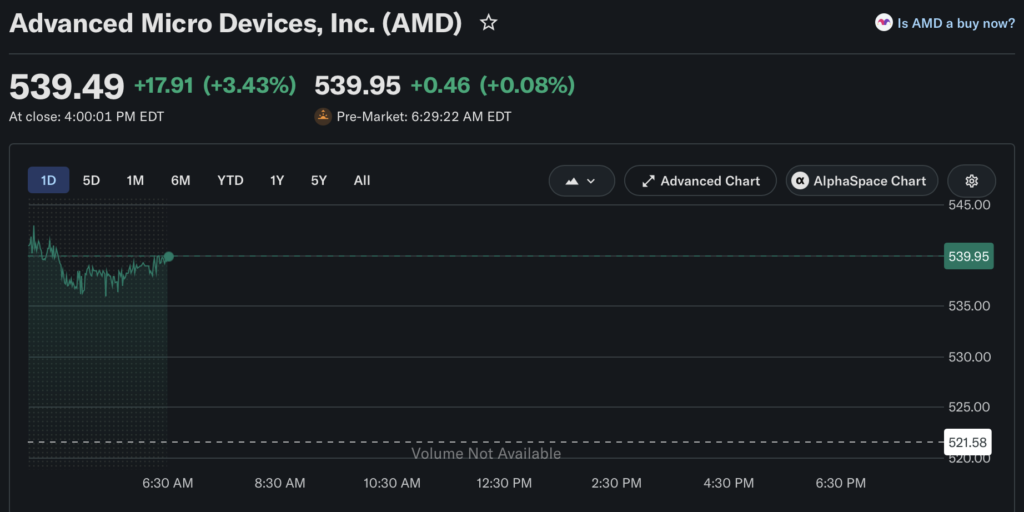
Advanced Micro Devices, Inc (AMD) stock prices have surged 3.43% (17.91 points) in the pre-market hours. The upswing comes after Cantor Fitzgerald raised AMD’s stock price target from $500 to $700, a 29.75% upside from current price levels. Let’s discuss if AMD can live up to the expectations from Wall Street.
Wall Street Raises AMD Stock Price Target: Can It Deliver?
Cantor Fitzgerald is not the only institution that raised AMD’s price target. Wells Fargo also raised its target from $505 to $615. AMD’s latest price rally also comes after Bank of America included the stock in its recent list of 8 stocks that would dominate the next decade. However, Wall Street’s average price target for AMD is currently $507.18, which is lower than current levels.
The current market scenario is hinged on the AI boom that has taken the world by storm. AMD’s stock price has risen by nearly 260% this year, riding the AI wave. The surge reflects the high demand for the company’s data center GPU (Graphics Processing Unit) products.
AMD’s stock price is expected to further gain traction after the advent of agentic AI. Agentic AI is more focussed on CPU (Central Processing Unit) power than the current GPU-centric AI platforms. AMD is one of the few companies that has its fingers on both the CPU and GPU markets. This could give the company a massive advantage over the current market leader, Nvidia (NVDA).
Also Read: Wells Fargo Assigns New Price Target For Amazon Stock (AMZN)
While the outlook for AMD’s future is quite bullish, there still exists risks around the asset. There have some warnings about a potential AI bubble that could lead to significant instability. Chinese hedge fund managers have also expressed a concerns about a potential AI bubble. However, most of the AI companies and the chip manufacturers are delivering real products with real profit. This could lead to a different trajectory when compared to the dot com bubble of the 90s.