





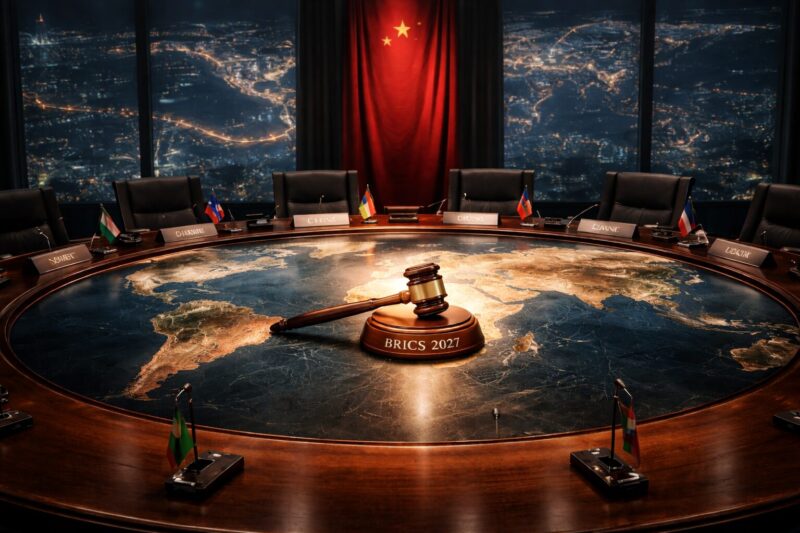
China is set to hold the BRICS chairmanship in 2027, and the preparations are already underway — right now, well before the calendar turns. Days before India formally took the reins in January 2026, China’s top diplomat was in New Delhi. Both sides agreed to mutually support each other’s leadership terms, and analysts are already calling this back-to-back sequence the most consequential one in the bloc’s history.
China’s BRICS chairmanship in 2027 follows Brazil in 2025 and India in 2026, and it arrives at a moment when BRICS de-dollarization plans are gaining real traction, BRICS Global South leadership is increasingly tied to Beijing’s agenda, and the BRICS financial system shift looks closer than ever to producing results that actually stick.
Also Read: BRICS Faces Major Test as Iran Crisis Threatens Global Oil
China BRICS Chairmanship 2027 And The Financial System Shift
A Bigger, More Consequential Bloc
The BRICS that China will lead through its 2027 chairmanship is also a much larger organization than the one Beijing led in 2017. Eleven full members are now part of the bloc — Indonesia joined in early 2025 — alongside several partner countries, and together they represent over 40% of the global population. US tariff pressure has also pushed conversations about alternative payment infrastructure well into the mainstream across member states, and the 2027 BRICS chairmanship is where many of those conversations are expected to move from talk to action.
| Year | Chair Country | Key Leader(s) | Summit Location |
|---|---|---|---|
| 2027 | China | Xi Jinping (Expected) | TBD |
| 2026 | India | Narendra Modi | TBD |
| 2025 | Brazil | Luiz Inácio Lula da Silva | Rio de Janeiro (Planned) |
| 2024 | Russia | Vladimir Putin | Kazan |
| 2023 | South Africa | Cyril Ramaphosa | Johannesburg |
| 2022 | China | Xi Jinping | Virtual (Beijing) |
| 2021 | India | Narendra Modi | Virtual (New Delhi) |
| 2020 | Russia | Vladimir Putin | Virtual (St. Petersburg) |
| 2019 | Brazil | Jair Bolsonaro | Brasília |
| 2018 | South Africa | Cyril Ramaphosa | Johannesburg |
| 2017 | China | Xi Jinping | Xiamen |
| 2016 | India | Narendra Modi | Benaulim (Goa) |
De-Dollarization and the Financial Reform Push
No topic tied to BRICS de-dollarization plans draws more attention right now than what China actually intends to do about dollar dependence. India kept that language off the front burner during its 2026 term — New Delhi has real reasons to avoid friction with Washington. Beijing faces no such constraint heading into the BRICS chairmanship in 2027.
At the 2024 Kazan Summit, Xi Jinping stated:
“Under the current circumstances, the urgency of reforming the international financial architecture is prominent. The BRICS countries should play a leading role, deepen financial cooperation, promote the interconnection of financial infrastructure, maintain high-level financial security, expand and strengthen the New Development Bank, and promote the international financial system to better reflect changes in the world economic landscape.”
A BRICS cross-border payment system and expanded IMF voting reforms are both widely expected to return to the table under the 2027 BRICS chairmanship, and the BRICS financial system shift Beijing has been pushing for years could finally gain the institutional momentum it has been missing.
The India Dimension Beijing Cannot Ignore
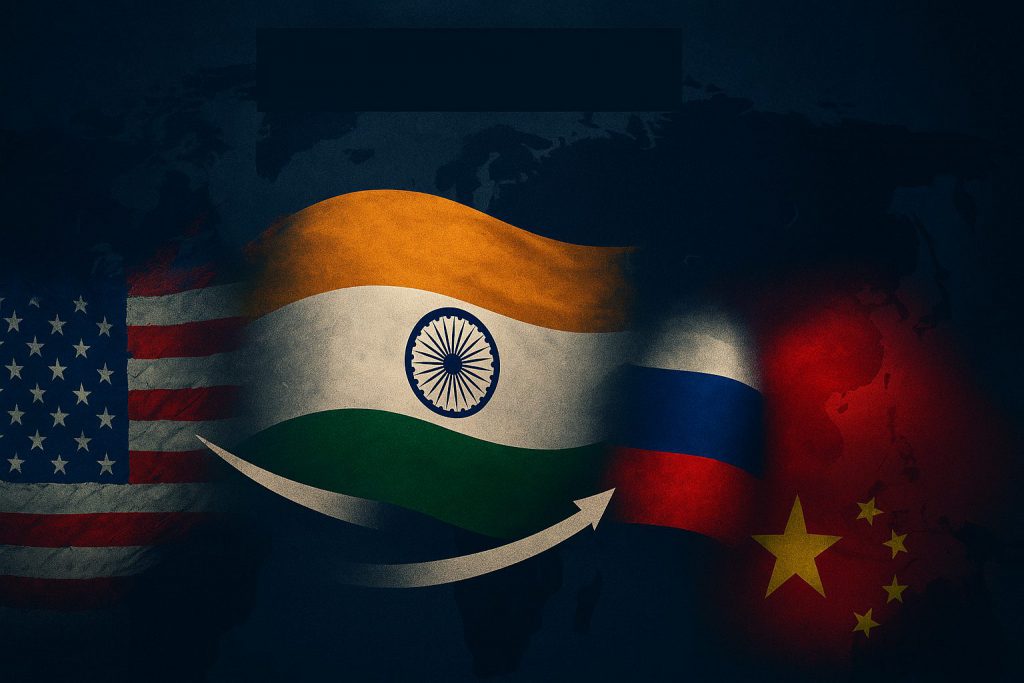
Former Indian diplomat Vidya Bhushan Soni noted that China has come to recognize BRICS without India’s active participation cannot get anywhere. That recognition is expected to shape how Beijing runs China’s BRICS chairmanship in 2027 — with a more consensus-driven approach, designed to keep the bloc’s largest democracy inside the tent. BRICS Global South leadership is being framed as collective rather than purely Chinese-led, and that distinction matters for keeping the coalition coherent.
Also Read: India Snubs BRICS Member Iran, Supports Israel and the US
The 2027 BRICS chairmanship is also expected to produce landmark language on AI governance, climate finance for developing nations, and reform of the international monetary system. Those topics are not being invented in 2027 — they are being built right now, through bilateral diplomacy and quiet agenda-setting happening across member capitals. China’s BRICS chairmanship in 2027 is, more than anything, one of the clearest signals yet that the post-Cold War international order is being renegotiated — and Beijing intends to be one of the authors.