





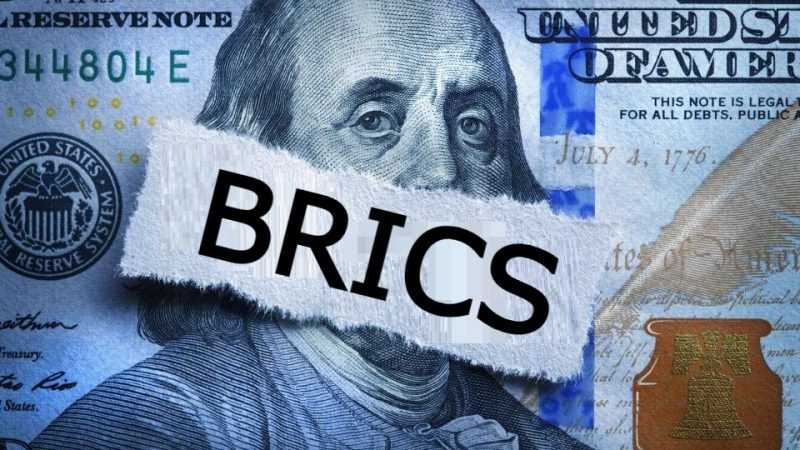
The central bankers of BRICS countries, especially Brazil, Russia, India, China, and South Africa, are confident that the US dollar’s share in global reserves will decrease in the next five years. 73% of the central bankers said that the US dollar’s dominance will be drastically reduced by 2030.
In addition, 43% of the central bankers confirmed that they intend to increase their gold holdings. The development indicates a major shift in how emerging economies are diversifying their reserves. BRICS has mostly been relying on gold rather than on the US dollar since 2022.
Also Read: US Explores Creating an Alternative to G7 by Including BRICS Members
US Dollar’s Reserve Currency Status To Decrease by 2030, Say BRICS Central Bankers

The move demonstrates a monetary shift where BRICS is calling the shots on the US dollar. It is no longer the most lucrative currency, but hoarding it in their reserves comes with a bigger risk. The risk includes being exposed to US deficits and its out-of-control National debt.
The National debt has already crossed $38 trillion and could reach $40 trillion next. Therefore, BRICS countries want to reduce their US dollar dependency to protect their respective economies. It could affect their GDP growth and cut through the revenues generated by their local businesses.
However, the BRICS alliance is yet to launch its new currency in the market to challenge the US dollar. The formation remains a mystery as not every member is on board with the idea. While Russia, China, and Iran are desperate, India, Brazil, and others are not. The division within the bloc could someday prove to be a costly affair for the alliance.
The US dollar remains the most dominant currency in 2025, and BRICS is aiming to topple it. Whether the currency will lose its dominance or not, we will know in 2030. The end of the decade could change the way we view the financial landscape.