





After Nvidia’s CEO Jensen Huang quipped at the GTC conference last week that the company sees a $1 trillion revenue visibility roadmap through 2027, the stock market’s focus shifted towards (NASDAQ: NVDA). The statement is ambitious, and traders love a company with bigger aspirations. The firm’s $68.1 billion revenue last quarter impressed the markets, and it is now moving with higher determination.
The $1 trillion guidance roadmap for Nvidia has struck a chord among Wall Street and stock market analysts. However, Wall Street analysts are in a tug-of-war about Nvidia’s stock prospects. On one side, macro-economic jitters over interest rates and oil spikes have pulled NVDA down to the $172-$175 range. NVDA is now moving close to its yearly low of $171.
Also Read: Analyst With 59% Success Rate on Stocks Recommends Buying Nvidia
Will the $1 Trillion Factor Push Nvidia Stock Towards $300?
Even the $1 trillion revenue assurance from the CEO failed to push Nvidia stock up in the charts. NVDA shed nearly 9% in a month, and traders who took an entry position are underwater. Tuesday’s opening bell saw NVDA trading at $175.68, up 1.59% from the previous day. The brief surge comes as a breath of fresh air, as the equity market has mostly remained in the red this month.
The Bullish Case
For NVDA to reach $300, it needs to jump close to 70% in the next nine months. Huang’s $1 trillion statement is based on the demand for Blackwell and upcoming Vera Rubin architectures through 2027 that can power up Nvidia stock. The high-volume buying isn’t coming from Microsoft or Meta anymore. Amazon Web Services (AWS) is also committed to purchasing 1 million Nvidia GPUs through 2027. This led the Bank of America to provide a price prediction that NVDA could indeed reach $300. Uber also revealed self-driven taxis, powered by Nvidia would hit the road in 2027.
The Bearish Scenario
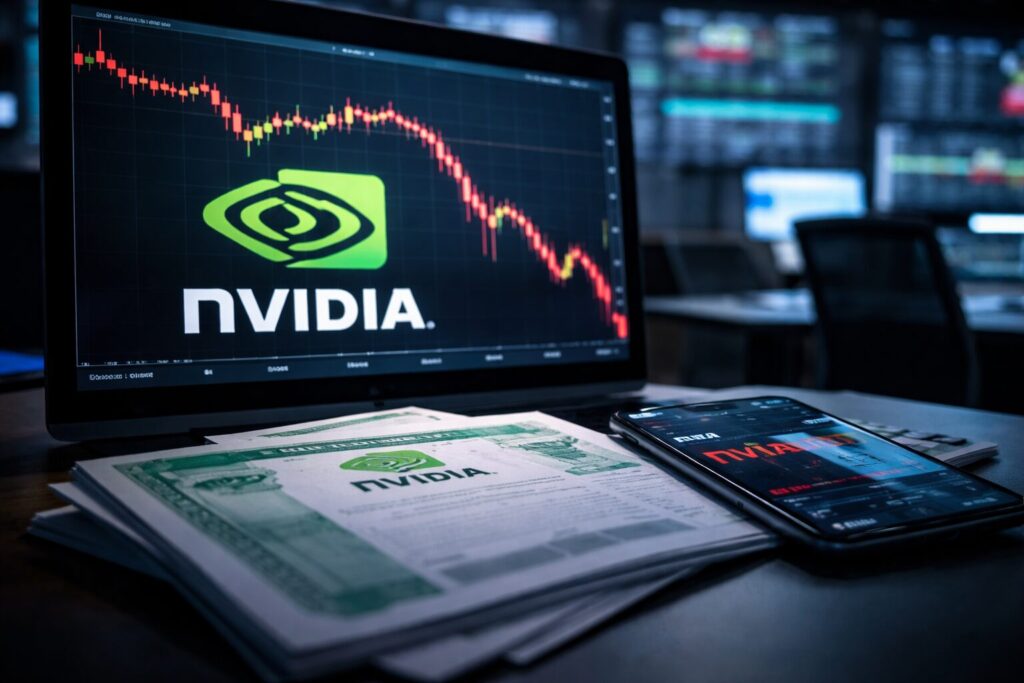
There is a disconnect between the $175 and $300 price ambition for the leading equity. Bears argue that AI ‘training’ demand is peaking, but Nvidia is now focusing on running the models once they are trained. They point out the supply gap that is missing, which can hamper Nvidia’s stock prospects. In addition, the escalating tensions in the Middle East is also a catalyst for the bearish thesis. This derails the $300 NVDA dream, despite the $1 trillion ambition.