






Billionaire Elon Musk recently highlighted the growing demand for AI memory chips while speaking at SpaceX’s post-earnings analyst call. Musk said that memory chips remain the biggest bottleneck in building AI infrastructure. There are currently three big names in the memory market, Micron, SK Hynix, and Samsung. Micron (MU) is the only US-based company among the big three. Let’s discuss if Elon Musk’s recent mention of memory chip demand is bullish for Micron (MU) stock or not.
Is Elon Musk’s Memory Demand Highlight Bullish For Micron Stock?
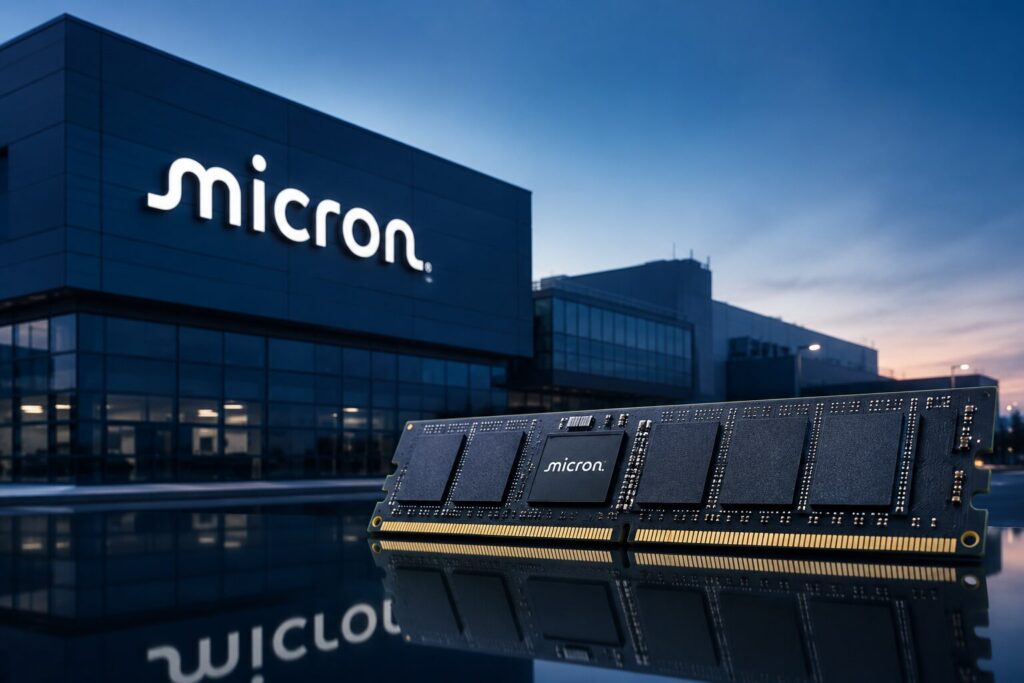
Micron (MU) has been one of the biggest beneficiaries of the AI boom. Whoever manufacturers the computing chip, Micron (MU) remain a key player as it provides memory chips for several manufacturers, including Nvidia, Intel, and AMD.
Micron’s stock price surge has been in tandem with the rise in memory chip demand. During SpaceX’s post-earnings call, Musk stated, “Limiting factor currently is memory. Memory output is increasing by around 20% per year. Now normally that would be fantastically fast and amazing for any large mature industry. But ask yourself is the demand increasing by 20% a year? No, the demand is increasing by 200% a year, maybe higher.“
Also Read: SpaceX Beat Wall Street, Yet the Bear Case Just Got Stronger
Musk’s statement could be bullish for Micron’s (MU) stock given that it highlights the massive demand for memory chips. The growing use of AI and data centers will only require more and more memory for smooth operations. Micron has a lot to gain from the development. If the trajectory continues on its current path, Micron (MU) stock price could hit a new all-time high very soon.
However, there are risks from Chinese competition and overspending. China’s ChangXin Memory Technologies (CXMT) and Yangtze Memory Technologies Corp. (YMTC) could eat up some of Micron’s market share as demand for more memory chips grows.