





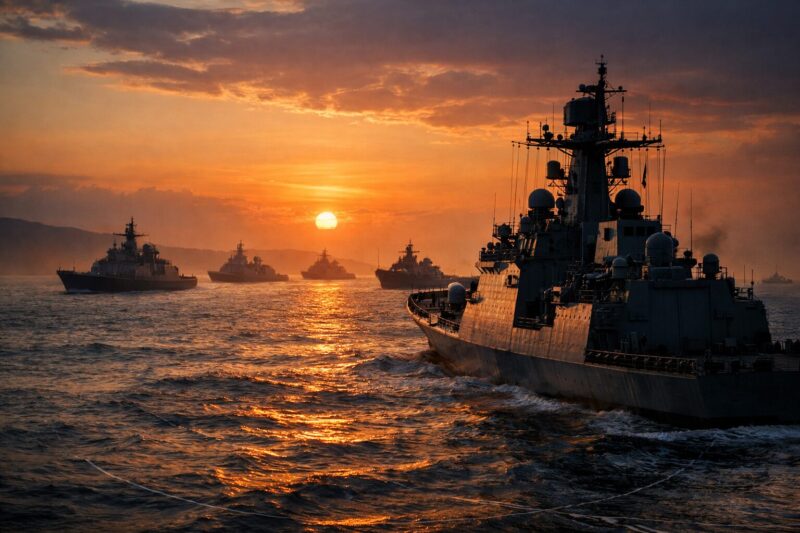
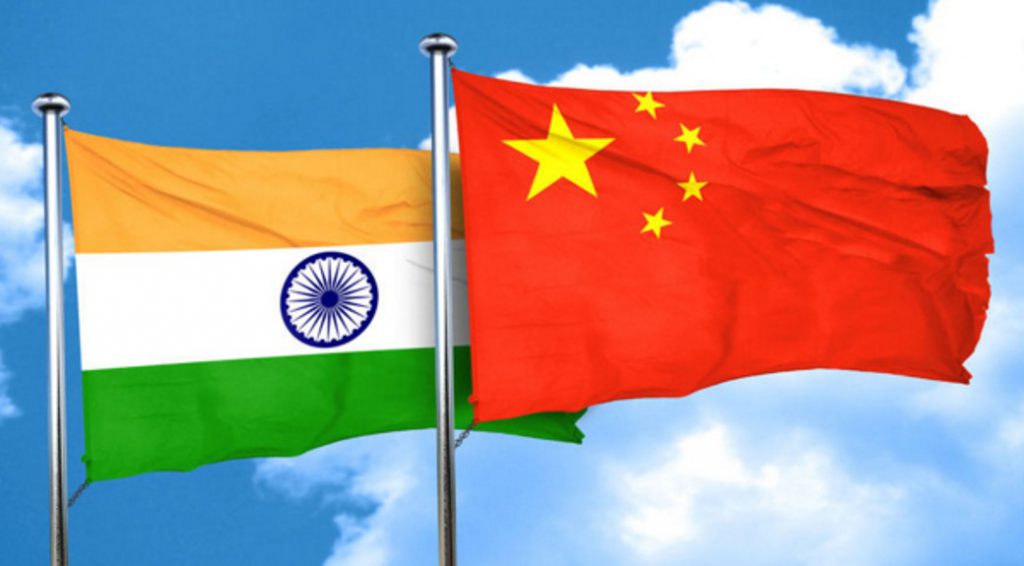
India BRICS tensions have escalated following New Delhi’s decision to skip a major naval exercise off South Africa’s coast. The drill, which began last week near Durban, brought together Russia, China, Iran, and also South Africa—all BRICS members—but India was notably absent. The decision is as a political choice driven primarily by India and China tensions and strategic concerns about Beijing’s participation in the Indian Ocean naval drill.
Also Read: China Unleashes E-Yuan as BRICS Escalate Attack on the Dollar
India-China Tensions Behind BRICS Naval Drill Snub in Indian Ocean
Political Calculations Drive India’s Absence
The BRICS military exercise which took place in South Africa entailed heavy military equipment, currently. Russia sent the Marshal Shaposhnikov 7,000-tonne destroyer and a tanker and China sent three of its ships, including the Tangshan guided missile destroyer, Daiging frigate and Taihu supply ship.
Two of the frigates were Iranian, and South Africa had three ships in the fleet, one of which was an offshore patrol ship. This time, India declined to attend this particular drill although it was invited by South Africa. Top officials affirmed that this was a political move and not a time issue. The India BRICS defence policy is now primarily cautious with regard to military involvement with Beijing even in multilateral schemes and platforms.
Independent military expert Helmoed Heitman stated:
“I have not heard of any other BRICS navy taking part, apart from South Africa, Russia, China and Iran.”
Line of Actual Control Remains Flashpoint
While India China tensions have shown some improvement since Prime Minister Narendra Modi’s visit to China for the Shanghai Cooperation Organisation summit, where he met Chinese President Xi Jinping, defense cooperation remains restricted at the time of writing.
According to defence analyst Dean Wingrin:
“The timing and partners change the political stakes.”
Chinese officials have been pushing for increased naval visits and joint exercises, but India remains hesitant about such arrangements. Sources emphasized that political breakthroughs must precede deeper military engagement. The India BRICS tensions highlighted by this episode underscore the limits of defense cooperation between New Delhi and Beijing, and also the broader challenges.
India Expands Maritime Role Elsewhere
Even as India missed the BRICS naval exercise which had been convened by South Africa, the Indian Navy is acquiring other roles in other forums. Training facilities will be headed by India to the Bahrain-based Combined Maritime Force, which is a coalition of more than 40 countries such as USA, Britain, France, Germany, Gulf states, Pakistan, and Turkey.
This marks the first time India will head the training capsule of the Combined Task Force 154, which focuses on enhancing maritime skills. The contrast reveals India’s selective approach—the country comfortably spearheads western-based maritime initiatives but avoids exercises where China participates in Indian Ocean naval drills.
DA spokesperson Chris Hattingh noted about the exercise:
“What begins as quiet military cooperation slips into secrecy and ends in open alignment.”
Also Read: How the US Is Responding to BRICS Challenging the Dollar
The ongoing India BRICS tensions demonstrate that border disputes continue to constrain military cooperation within the bloc. As long as India China tensions persist along the Line of Actual Control, joint defense initiatives involving both nations will remain limited, regardless of improvements in other bilateral areas. The India BRICS defence strategy appears focused on managing these sensitivities carefully.