





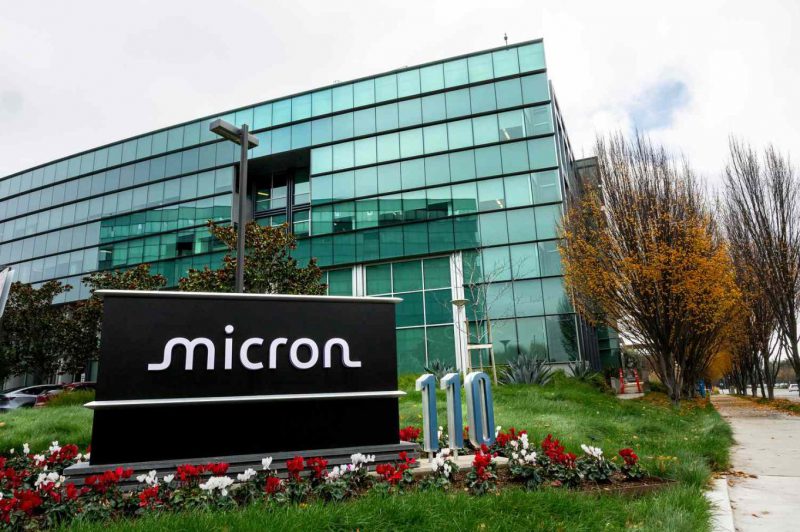
Micron (MU) stock has seen a downtick in the past week as the RAM developer is seeing heightened competition from Samsung. The latter will reportedly begin large-scale HBM4 chip production starting this month. Despite having a majority buy rating on Wall Street, the increased competition and recent forecast revisions caused MU stock to fall for a second-straight session.
Samsung’s earlier HBM4 ramp and Nvidia’s supplier choice could limit Micron’s share of this specific AI accelerator cycle and add pressure in a historically cyclical DRAM and HBM market. On the flip side, Micron is benefiting from tight DRAM and HBM supply, contracted HBM volumes and strong AI driven demand across data centers, PCs and smartphones, which analysts link to improved earnings and margins.
Despite the dip this week and recent setbacks in high-bandwidth memory orders, Micron’s strong earnings projections and low valuation metrics suggest promising growth potential. Analysts on Wall Street have high forecasts for MU, with shares currently trading at $376. Micron has gained 14.4% over the past month, and Wall Street suggests the best is ahead. Indeed, Analyst revisions have been positive, contributing to Micron’s strong buy rating, with expectations of significant revenue growth of 132.3% year-over-year.
Also Read: Paramount (PSKY) vs Netflix (NFLX): Which Will Win WBD Battle
Micron MU is trading near the top of its 52-week range and above its 200-day simple moving average. Forecasts project MU to climb as much as 56% to $600. Deutsche Bank was the latest firm on The Street to raise MU, calling it a buy while applying a $500 forecast. Meanwhile, Top TD Cowen analyst Krish Sankar has set a new bull-side $600 price target for Micron stock, implying an impressive 56.4% upside potential from current levels.
Demand for memory chips due to AI applications has helped boost Micron (MU) stock to new heights. However, in the past, upward cycles have eventually given way to a glut of memory chips on the market, leading to subsequent downturns. The future is uncertain for MU, but mostly bullish.