





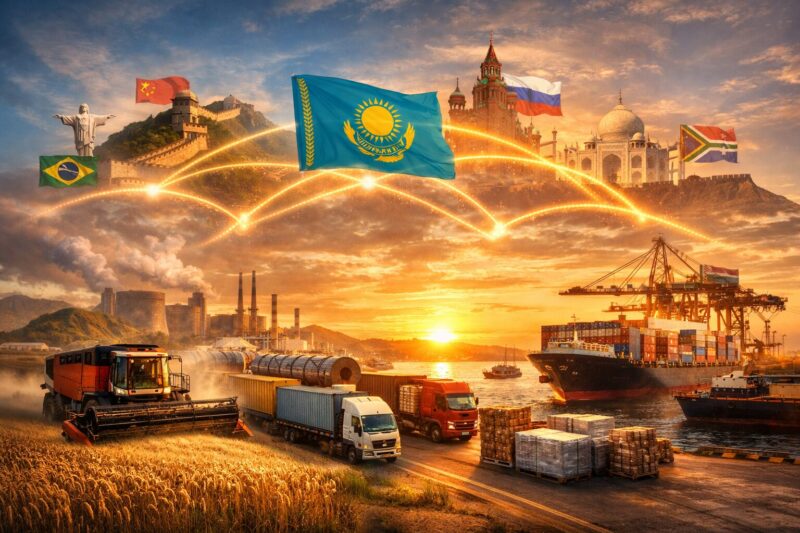
Walk through Kazakhstan’s 2025 trade numbers and a pattern shows up pretty fast. The Ministry of Trade and Integration recorded $160 billion in domestic trade turnover, $41 billion in non-oil exports, and a 3.7% rise in services exports to $12.3 billion. Kazakhstan market and exports, right now, have momentum that goes well past oil and gas. The 2026 roadmap builds on that — pointing Kazakhstan export expansion toward higher value goods, shoring up Kazakhstan domestic production, and threading into the BRICS economy through trade ties that have been quietly deepening for a while.
Also Read: Jim O’Neill Questions BRICS Challenge to the West
Kazakhstan Trade Growth Drives Domestic Production And BRICS Economy
What the Ministry Is Actually Changing
The review was led by Deputy Prime Minister and Minister of National Economy Serik Zhumangarin. He didn’t leave much room for ambiguity on the role Kazakhstan market and exports should play going forward.Zhumangarin stated:
“Our aim is not only to maintain current momentum but to elevate the trade system to a higher level of efficiency and competitiveness. The Ministry must transition from a regulatory role to that of an active growth driver.”
The ministry has already put together a preliminary portfolio of some 1,500 investment projects — covering agro-industrial production, manufacturing, and infrastructure. More than 500 of those are in agriculture, and over 400 go into processing industries. The ministry will also guarantee distribution for whatever these projects produce, which is a fairly direct way to close the gap that usually sits between Kazakhstan domestic production and actual buyers.
The 2026 Targets and the BRICS Economy Angle
The ministry has dropped raw material volume as a priority — Kazakhstan export expansion for 2026 targets high value-added goods, and the plan also pulls in wider wholesale and retail turnover, more reliable supply chains for basics, and a real digitalisation push across trade. Kazakhstan trade growth in services already moved 3.7% up, so the economy carries some preparation for this.
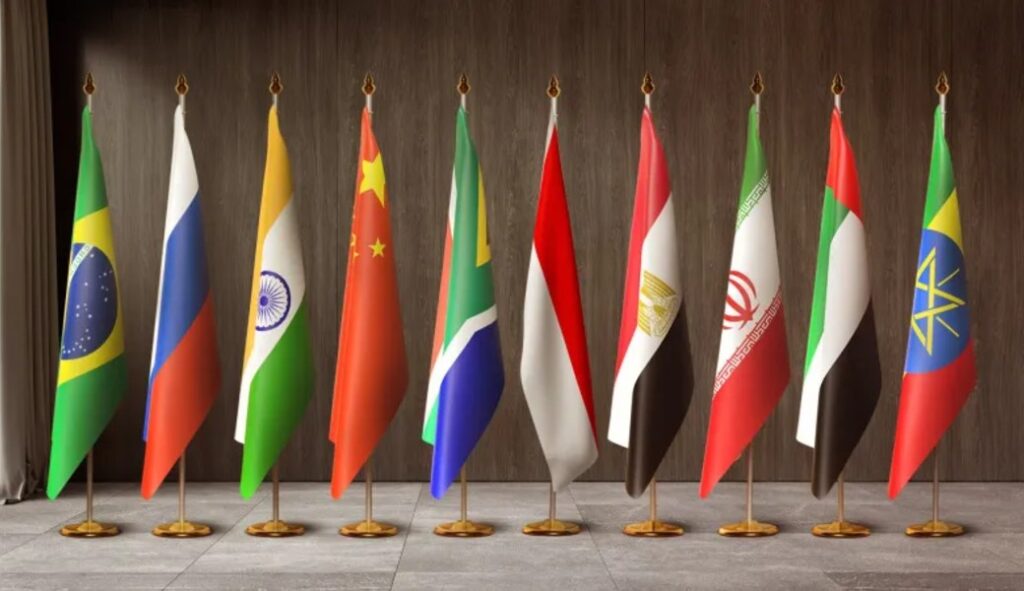
Kazakhstan doesn’t sit inside the BRICS economy formally, but China and Russia do — and those two also happen to be where a big chunk of Kazakhstan’s trade goes. The BRICS economy is quietly but consistently building corridors that bypass Western supply chain dominance, and Kazakhstan market and exports are already pointing that way. Kazakhstan trade growth outside oil, and Kazakhstan domestic production getting actual distribution guarantees, make the country a more serious partner in that network than it was even recently.
Also Read: BRICS Push For Trade in National Currencies: Brazil President
The 1,500-project portfolio is big enough that nobody should pretend execution is straightforward. But a ministry that has put distribution guarantees behind Kazakhstan domestic production output and publicly dropped the regulator label in favor of growth driver is doing something slightly unusual — it’s making the commitment visible enough to be held to it.