





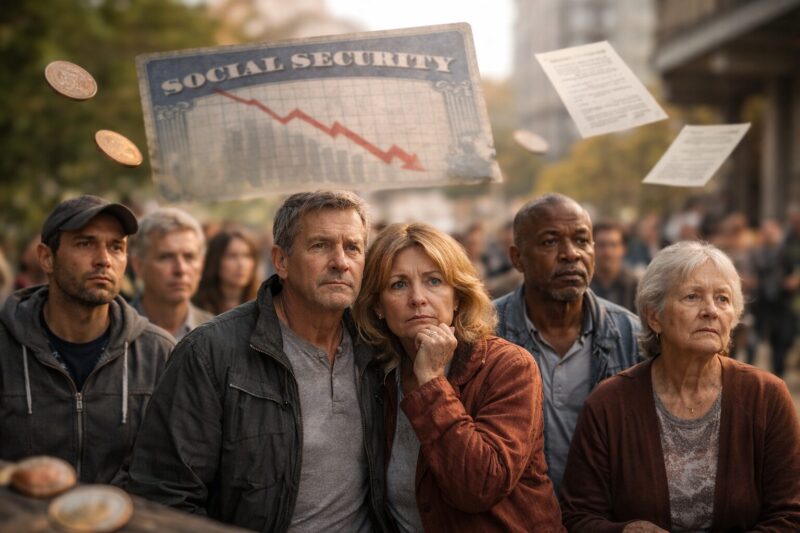
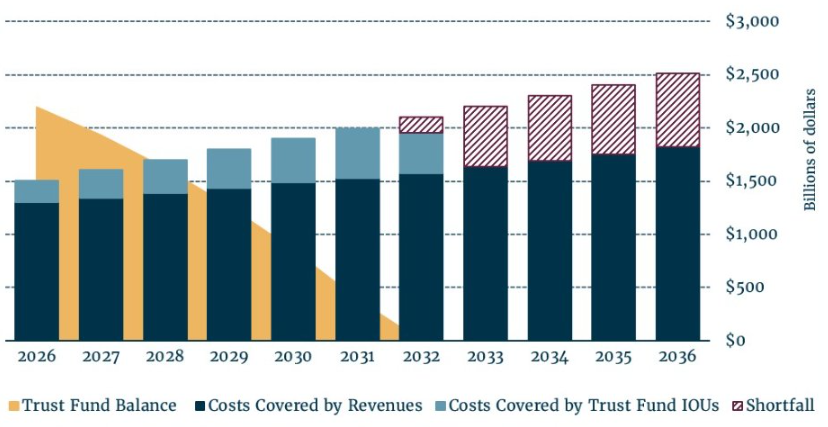
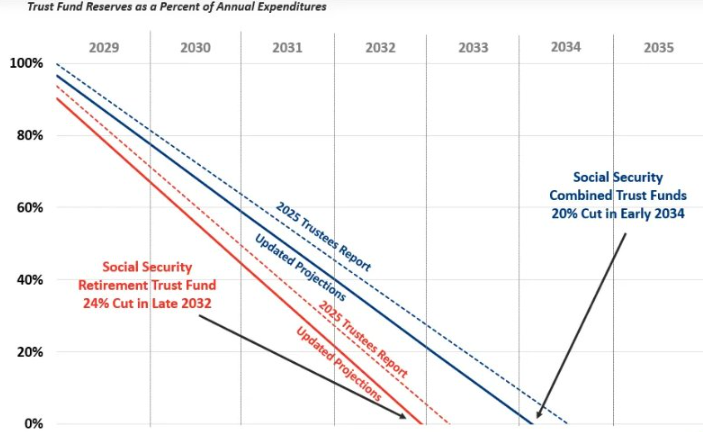
Benefit cuts of up to 28% will hit Social Security recipients starting in 2032, and right now, Congress has no plan to stop them. The Congressional Budget Office moved the Social Security trust fund depletion date forward a full year — from 2033 to 2032 — in its February 2026 Budget and Economic Outlook. That also means roughly 72 million Americans who collect retirement benefits from Social Security are staring down an automatic reduction the moment the Old Age and Survivors Insurance fund runs dry. Under current law, all beneficiaries face the same percentage cut, no matter their age, their income, or how many decades they paid in.
Source: Congressional Budget Office
Benefit Cuts Will Impact All Social Security Beneficiaries By 2032
The Trust Fund Has Been Draining for Years
Source: Social Security Administration and Committee for a Responsible Federal Budget
The Social Security trust fund started paying out more than it collected in 2021, and the gap has grown every year since. At the time of writing, two recent laws also made things considerably worse. The One Big Beautiful Bill Act cut the revenue flowing into the fund by reducing income tax rates on seniors’ benefits. The Social Security Fairness Act added around $200 billion in new obligations over ten years. Together, those two pieces of legislation pushed the 75-year shortfall to almost 4% of taxable payroll — up from 3.5% in 2024 and just 1.9% back in 2010. SS trust fund depletion on this timeline means today’s 60-year-olds will reach normal retirement age right when the cuts kick in.
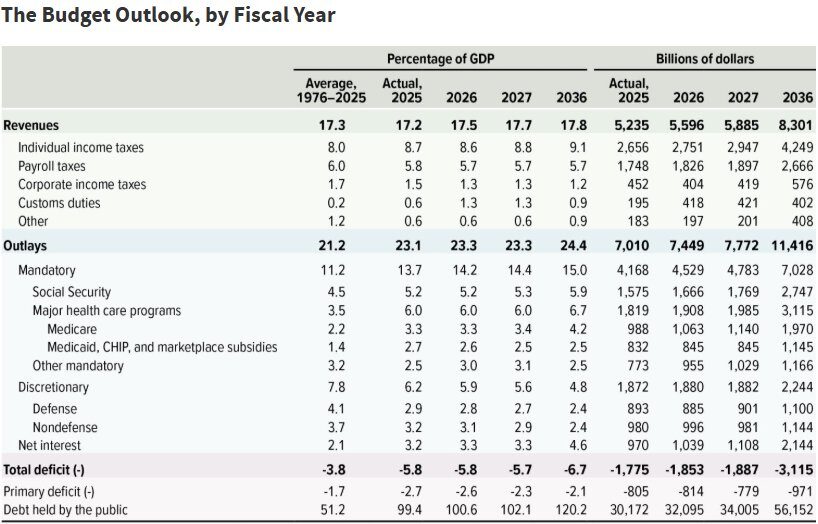
The numbers in the CBO’s updated baseline also show Social Security spending climbing from around $1.6 trillion in 2026 to more than $2.7 trillion by 2036. The fund simply cannot keep up, and social security insolvency on this scale would be the largest single blow to American retirees in the program’s 90-year history.
CBO Director Phillip Swagel stated:
“Our budget projections continue to indicate that the fiscal trajectory is not sustainable.”
What the Benefit Cuts Would Actually Mean for Retirees
Source: Social Security Administration and Committee for a Responsible Federal Budget
Benefit cuts under the CBO’s illustrative scenario start at around 7% in 2032 and then grow to an average of 28% per year from 2033 through 2036. Someone collecting $2,000 a month right now would see that figure drop to roughly $1,440. These are US benefit cuts with no carve-outs — all beneficiaries take the same hit in percentage terms, and the law right now has no mechanism to protect lower earners from the full weight of the reduction.
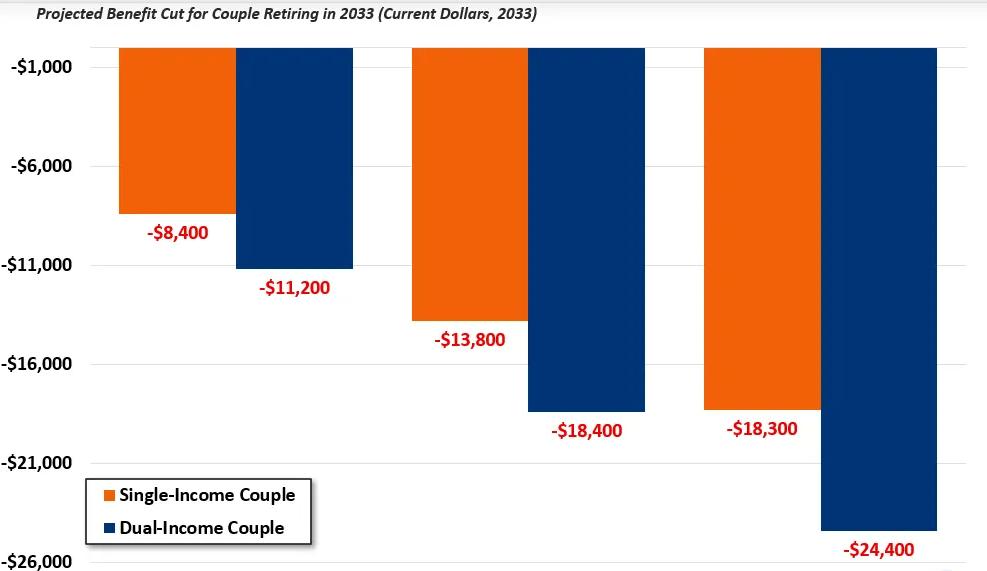
A typical dual-income couple retiring shortly after SS trust fund depletion would lose around $18,400 a year, according to the Committee for a Responsible Federal Budget. A single-earner couple would face a $13,800 annual cut. High-income households could see US benefit cuts reaching $24,400. The dollar loss looks smaller for lower earners, but as a share of their total retirement income, those cuts hit far harder.
Max Richtman, CEO of the National Committee to Preserve Social Security and Medicare, stated:
“My takeaway from all of this is we don’t have much time to spare to address the shortfall. If there’s not enough revenue coming in payroll taxes — and I don’t see that changing — benefits are going to be cut dramatically.”
What It Would Take to Stop Social Security Insolvency
Source: Congressional Budget Office
The retirement benefits Social Security currently pays out to tens of millions of Americans will keep growing — from $1.6 trillion this year to over $2.7 trillion by 2036. That trajectory, combined with the Social Security trust fund running dry in 2032, leaves Congress with a very narrow window and a set of options that none have been willing to push through so far. Raising the payroll tax from 12.4% to around 17%, adjusting the retirement age, and limiting benefit cuts for lower earners while phasing in reductions for higher-income recipients are all on the table in theory.
Social security insolvency in 2032 would also ripple through the broader economy. The CBO estimates that real GDP would come in around 0.7% lower in 2033 as a result of reduced consumer spending, and the Federal Reserve would likely respond with rate cuts to soften the blow. That also means the economic damage from these US benefit cuts would extend well beyond individual retirees.
Rachel Greszler, Visiting Fellow at the Economic Policy Innovation Center, stated:
“Policymakers should focus their efforts on protecting lower-income retirees, reducing Social Security’s long-term tax burden on all Americans, and introducing personal ownership options that strengthen retirement security without expanding government dependency.”
Jim Blankenship, Social Security analyst and financial planner at Blankenship Financial Planning, stated:
“Using history as our guide, I still don’t expect to see any substantive changes to the Social Security program before the last possible minute.”
Source: Congressional Budget Office
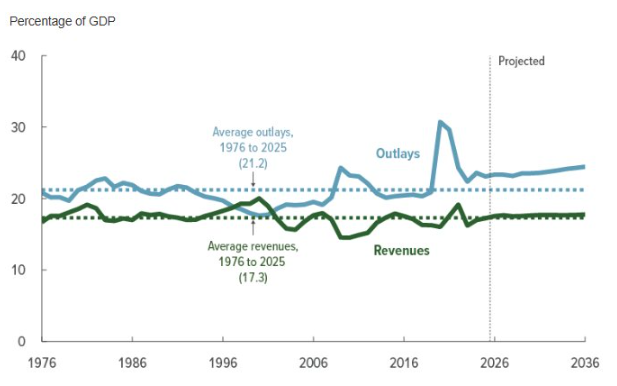
The Social Security trust fund is draining faster than any projection from even a year ago suggested. The benefit cuts scheduled for 2032 are no longer a warning — they are the default outcome if Congress stays idle. For the 72 million people whose retirement benefits from Social Security depend on lawmakers acting, that is a reality that keeps getting harder to push aside.