






India’s stock market indexes Sensex and Nifty crashed on Monday minutes after the opening bell. Sensex fell more than 1,000 points in the day’s trade, while Nifty plummeted 300 points. The crash has shocked retail investors, as most of their investments remain in the red. Nifty has fallen to the 22,800 level, and Sensex plunged to the 72,900 range. They are now at their May 2024 lows, meaning that the market has remained stagnant for a full two and a half years in the bigger picture.
Also Read: When Will Nvidia Stock Go Down? Here’s What Could Trigger It
Sensex and Nifty Crash: 3 Reasons India’s Stock Market Is Plunging
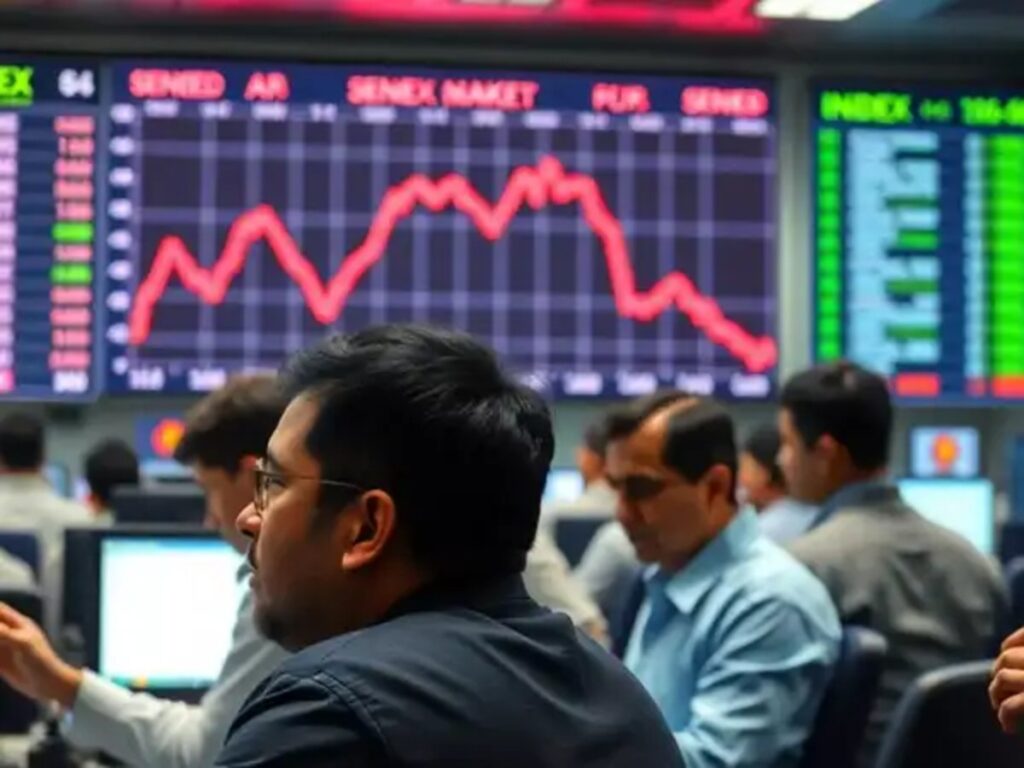
- Foreign Institutional Investors (FIIs) Continue To Sell: The latest data shows that FIIs have sold $384.67 million worth of equities on Friday. Compared to this, domestic institutional investors (DIIs) bought $295.63 million worth of equities. A clear difference of $89.04 million at the closing bell is sending the markets into a tizzy on Monday. FIIs have been selling at a record pace, affecting India’s stock market indices, the Sensex and Nifty.
- Brent Oil Rises Above $106: While Crude oil fell to $93 per barrel on Monday, Brent oil has risen to $107. It jumped 2.9% in the day’s trade, igniting fears of higher borrowing costs. The development will once again affect the price of fuel, transportation, and goods, which drives up broader consumer prices. Everything is closely intertwined, and the effects will first be reflected in the stock market; India’s Sensex and Nifty are paying the price.
- The Great Tax Burden: Sensex and Nifty are the pillars of India’s stock market and are on their weakest foot. Retail investors are the first to suffer, as the government has increased the taxes for Short Term Capital Gains (STCG) from 15% to 20%, and Long Term Capital Gains (LTCG) from 10% to 12.5% in July 2024. The market has not been stable since then, as the taxes have come down hard on traders. Taxes are eating into profits, and this has led to a dampened mood for retail investors.