





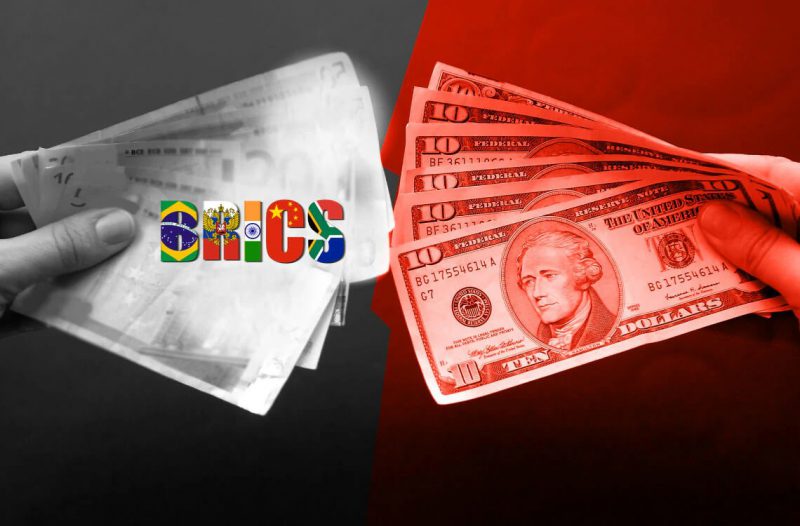
BRICS is hardly using the US dollar for trade, as the latest data from the VTB Bank shows that the bloc has settled 60% of cross-border transactions in local currencies. “Over the years, they have gradually transitioned to a settlement system that hardly uses the dollar or the euro,” said VTB CEO Andrei Kostin during an interview with Sputnik News.
The development highlights the extent to which the BRICS bloc is willing to go to put their local currencies ahead of the US dollar. The whole idea is to make their local currencies available for most of the trade deals among member countries. This strengthens their economies, as they aid their national tender. It also makes local currencies stronger in the forex markets and helps them to trade positively in the charts.
Also Read: India’s 400 Airport Push By 2047 Lifts BRICS Global South Ambitions
BRICS: Only 40% of Transactions Are Conducted in the US Dollar
The 60% of BRICS settlements in local currencies are mostly conducted between Russia, China, and India. Even most of the payments to Iran are also using the same method. The Russian ruble, Chinese yuan, and the Indian rupee are widely accepted within the alliance. Russia has been accepting the Chinese yuan for all trade deals for close to four years.
On the other hand, India has also been paying the rupee and the ruble for oil deals with Russia. A part of the payments was also made in the Chinese yuan for settlements. BRICS is making use of sanctions and discontent against the US dollar to make local currencies thrive. The bloc is leveraging the unruly policies of the White House to its benefit to further the de-dollarization agenda.
BRICS could make local currencies play a bigger role in the coming decade, elbowing the US dollar. The global monetary system could be much different in the coming years than it is now. This makes emerging economies take a share in the global economic affairs, and it will no longer be solely the West’s territory.