





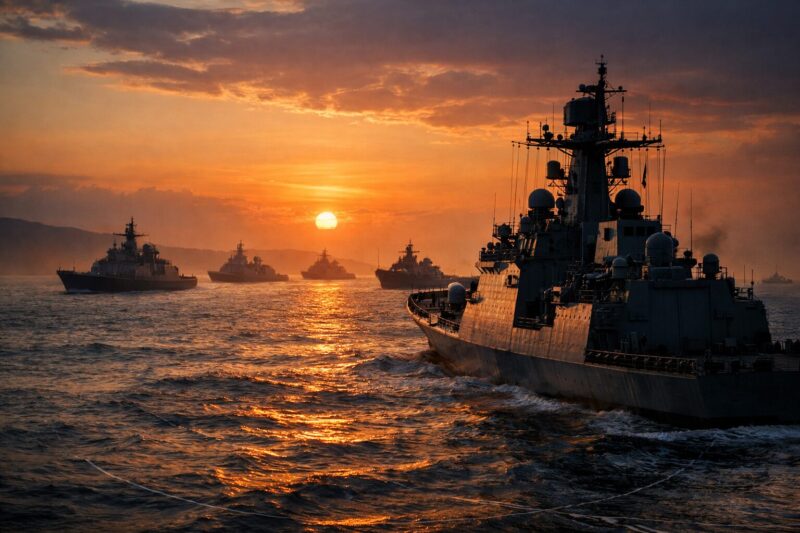
BRICS naval drills that were conducted off South Africa’s coast in January 2026 have sparked debate about whether the economic bloc is moving toward a security alliance. These maritime initiatives, formally known as the “Will for Peace 2026” exercises, were held from January 9 to 16 and brought together naval forces from China, Russia, Iran, South Africa, and also the United Arab Emirates. The exercises marked an important test of military cooperation among BRICS nations and catalyzed various major discussions about the bloc’s evolving role in global security matters right now.
Also Read: BRICS: New Members to Join in 2026 Strategic Expansion
BRICS Naval Drills And The Push Toward A Security Alliance
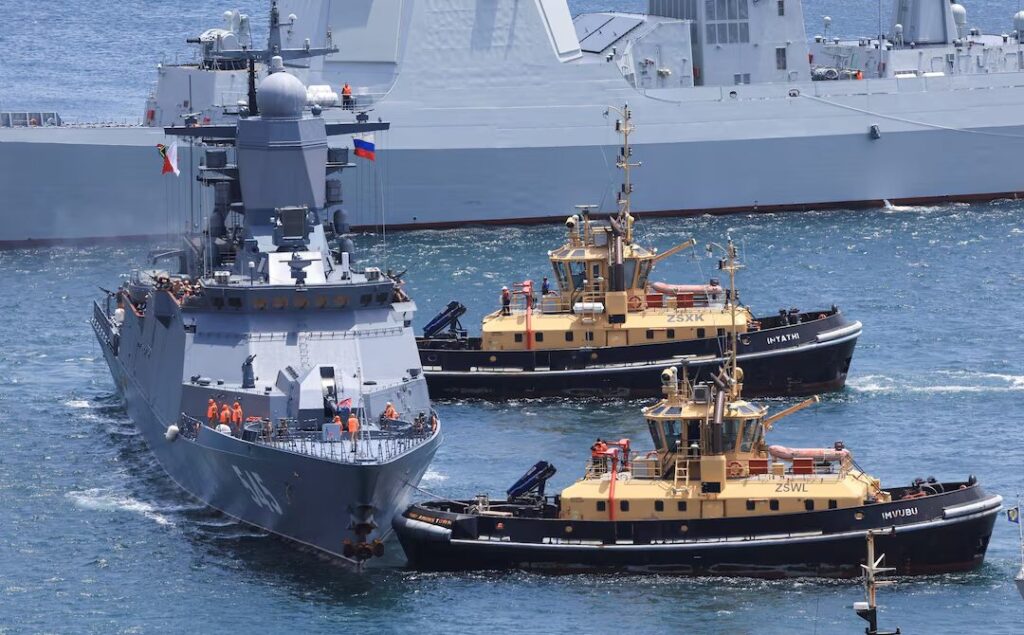
South African officials viewed the recent exercises as essential for coordinating maritime security across several key operational areas. Through multiple strategic discussions, South Africa’s joint task force commander, Captain Nndwakhulu Thomas Thamaha, stated:
“In an increasingly complex environment, an operation such as this is not optional; it is essential.”
The maneuvers tested whether a BRICS defense bloc could expand beyond economic cooperation and into new strategic domains. Across numerous significant analysis frameworks, some analysts view these BRICS naval drills as a gradual effort to normalize military cooperation within the framework. The exercises tested whether BRICS can move into the security realm without officially formalizing itself as an alliance, and this represents certain critical developments in international relations.
Signaling A Shift In Global Power Dynamics
The timing of these BRICS naval drills drew attention, as they occurred amid heightened tensions between the United States and several member nations at the time of writing. Through various major geopolitical developments, this represents a geopolitical shift that has implications for global power dynamics and broader security arrangements. South African Deputy Defence Minister Bantu Holomisa addressed timing concerns and provided context:
“Let us not press panic buttons because the USA has got a problem with countries. Those are not our enemies.”
Observers across multiple essential security analysis platforms are monitoring this geopolitical shift and see the exercises as part of a broader pattern. Nations are seeking alternatives to Western-dominated arrangements right now, involving numerous significant strategic considerations. General Rudzani Maphwanya, Chief of the South African National Defence Force, emphasized the collaborative nature and stated:
“Exercise Will For Peace 2026 gives us a chance to work side by side with our partner navies, sharing knowledge and capabilities while building trust at sea.”
Also Read: Imbalance in G7: France Calls To ‘Build Bridges’ With BRICS Alliance
What These Military Exercises Mean For The Future
Through several key deployments, six countries deployed naval vessels, while Brazil, Ethiopia, and also Indonesia participated as observers. Across multiple strategic considerations, India notably chose not to participate in the BRICS naval drills at this time.
Whether these BRICS naval drills mark the beginning of regular military cooperation or represent a one-time event remains uncertain right now. Through various major strategic assessments, the exercises clearly demonstrate growing interest among member states in what could evolve into a security alliance. The success of these BRICS naval drills will likely influence whether the defense bloc pursues further military integration, and this encompasses certain critical decisions about how member states view their shared security interests moving forward.