





New participants are expected to join BRICS in 2026 as the economic bloc accelerates its growth through a formal partner country system. Over 30 nations have now submitted active applications or expressed official interest in membership, with the total interest pipeline — including informal inquiries — estimated at more than 50 countries across Asia, Africa, and Latin America. The push to join BRICS has generated significant attention among investors and analysts tracking global trade realignment and the shift away from Western-dominated financial institutions.
The bloc, which began operations with four nations in 2006, has expanded in phases across two decades. At the time of writing, BRICS includes eleven full members and ten partner nations cooperating across multiple sectors. This growth reflects broader patterns in emerging economy cooperation beyond traditional Western-led institutions.
Also Read: BRICS vs ASEAN in 2026 Shows Why Alignment May Backfire
New Members Want To Join BRICS In 2026, Partner Countries, And Full List
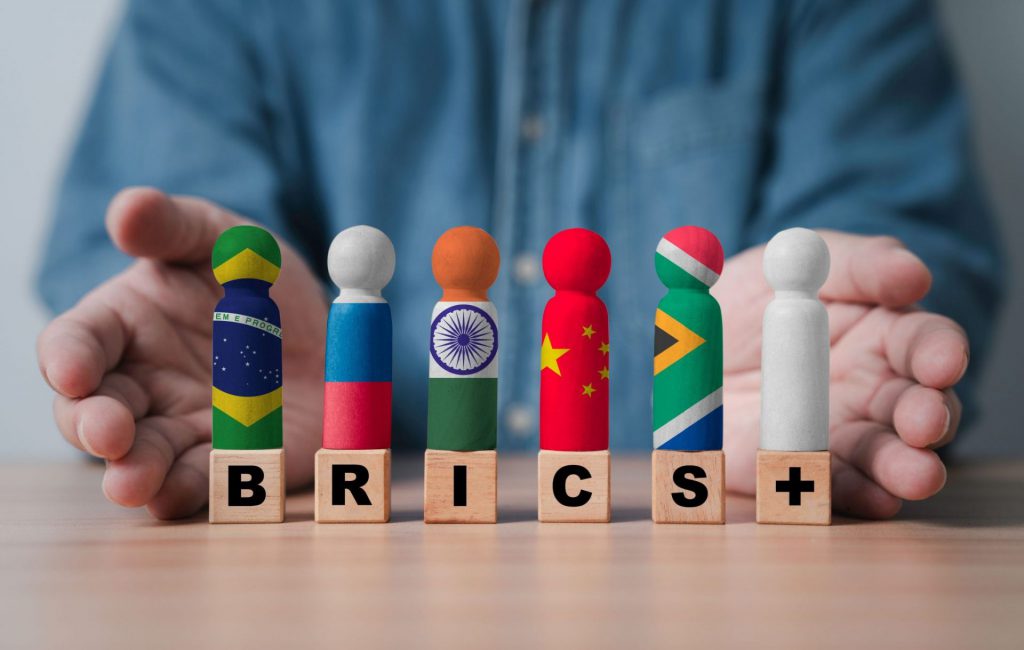
Ten Partner Nations Now Working with the Bloc
The 2024 Kazan Summit in Russia introduced the BRICS partner countries framework, establishing a new tier of engagement. The summit recognized nine initial nations under this tier: Belarus, Bolivia, Cuba, Kazakhstan, Malaysia, Nigeria, Thailand, Uganda, and Uzbekistan. Brazil subsequently announced Vietnam’s admission in early 2026, making it the tenth partner country to formally join this strategic initiative.
Partner status allows countries to engage with BRICS initiatives and participate in summits without full membership — including attendance at working group meetings. It functions as a structured on-ramp for new members to integrate gradually across several key phases, while addressing concerns about maintaining organizational efficiency as the bloc grows.
Indian Prime Minister Narendra Modi stated at the 17th BRICS Summit:
“India would give a new form to the BRICS grouping during its presidency in 2026.”
Current Member Nations and Those Seeking Entry
The BRICS countries list has expanded significantly from its original five founding nations. Eleven full members now make up the bloc: Brazil, China, Egypt, Ethiopia, India, Indonesia, Iran, Russia, Saudi Arabia, South Africa, and the United Arab Emirates. Indonesia became a full member on January 6, 2025, marking the first Southeast Asian nation to join the alliance.
Multiple countries are being evaluated for potential full membership. The list of nations formally seeking entry includes Algeria, Azerbaijan, Bahrain, Bangladesh, Pakistan, Serbia, Sri Lanka, Syria, Turkey, Venezuela, and Zimbabwe, among others. In total, more than 30 countries have submitted formal applications or consistently expressed interest, while the broader pipeline of nations exploring alignment with BRICS exceeds 50. These applicants represent diverse economic profiles spanning every major developing region.
Victoria Panova, Head of the BRICS Expert Council—Russia, explained the bloc’s approach:
“BRICS aims to make a fairer world order, it doesn’t have an aim of expansion as an aim in itself. The aim isn’t to duplicate the UN’s General Assembly.”
The bloc’s expansion isn’t just about adding numbers across numerous significant markets. Reserve Bank of India Governor Shaktikanta Das addressed economic motivations:
“De-dollarization for India was only a part of derisking Indian trade and reducing dependence on any one currency since that may become problematic.”
India Took Leadership for 2026
India officially assumed the BRICS presidency on January 1, 2026, marking the country’s fourth time leading the organization, having previously held the role in 2012, 2016, and 2021. The theme for India’s presidency is “Building for Resilience, Innovation, Cooperation, and Sustainability.”
India will host the 18th BRICS Summit on September 12–13, 2026, in New Delhi, where decisions on full membership for additional countries are expected to be finalized. Officials describe India’s approach as a “calibrated stance” on further expansion, with the country prioritizing internal cohesion within the current eleven-member bloc.
South African Minister of Finance Enoch Godongwana indicated that BRICS will admit additional countries:
“There is a second batch of countries that are going to be added to BRICS.”
The BRICS expansion process in 2026 balances growth with organizational effectiveness. Internal divisions remain a factor: China and Russia advocate for rapid expansion to challenge Western financial hegemony, while Brazil and India favor strict evaluation processes to preserve decision-making efficiency. The partner country framework provides a pathway for interested nations while allowing existing members to assess how new additions will contribute before granting full membership.
May 2026 Developments: Foreign Ministers Meet, Payment Framework Launched
As of May 2026, momentum around BRICS expansion is accelerating ahead of the September summit. BRICS foreign ministers convened on May 14–15 at the Bharat Mandapam in New Delhi — the first major ministerial gathering under India’s chairship. Saudi Arabia participated as an observer, reflecting its continued ambiguous status as an invited but not yet formally confirmed full member. All partner countries also attended under the new partner country format, a sign that the two-tier structure is functioning as intended.
A key outcome of the May meeting was the piloting of a cross-border payment framework linking member national payment networks, with India offering its UPI platform as a reference implementation. The system supports local currency settlement and sidesteps calls for a common BRICS currency — a politically divisive proposal India has consistently resisted. The payment framework marks a shift from rhetoric to infrastructure in the bloc’s de-dollarization agenda. Separately, Nigeria and India deepened bilateral engagement ahead of the meeting, with New Delhi describing Lagos as a “strategic partner” and a leading candidate for the next round of African representation within BRICS.
Economic Impact and Growing Global Influence
The bloc’s economic influence has driven substantial shifts in global commerce. BRICS nations now account for approximately 40% of global GDP by purchasing power parity and represent close to half of the world’s population. The New Development Bank, established by BRICS in 2014, has deployed over $42.9 billion across 139 projects since 2016. In April 2026, the NDB received an additional AAA credit rating from China Chengxin International — adding to existing top-tier ratings from Japan’s JCR — further cementing its standing as a credible alternative to Western multilateral lenders. Colombia and Uzbekistan also joined as the newest NDB members, expanding the bank’s reach beyond the core BRICS bloc.
Questions about which countries want to join BRICS reflect broader concerns about the global financial system and the dominance of institutions like the IMF and World Bank. Interest from Africa, Asia, and Latin America has accelerated sharply, with analysts tracking the September 2026 New Delhi summit as the most likely moment for a second-wave membership announcement. Russia’s Vladimir Putin has already confirmed attendance, and Turkey — a NATO member — is actively seeking China’s backing to advance its full membership application ahead of that date.
Also Read: Move Over BRICS, Zambia’s Government Accepts Chinese Yuan as Taxes
Strategic Framework for Future Membership
The partner country tier is proving its value as a structured on-ramp for potential full members. As of May 2026, ten nations hold that status and are participating in working groups, attending ministerial meetings, and in some cases accessing NDB financing — all without assuming the full political obligations of membership. BRICS designed this approach specifically to prevent rapid expansion from diluting the influence of existing members or undermining consensus-based decision-making. By the time candidate nations are considered for full membership at the September summit, several will have spent nearly two years building institutional relationships across the bloc — making the transition less disruptive and more strategically coherent.