





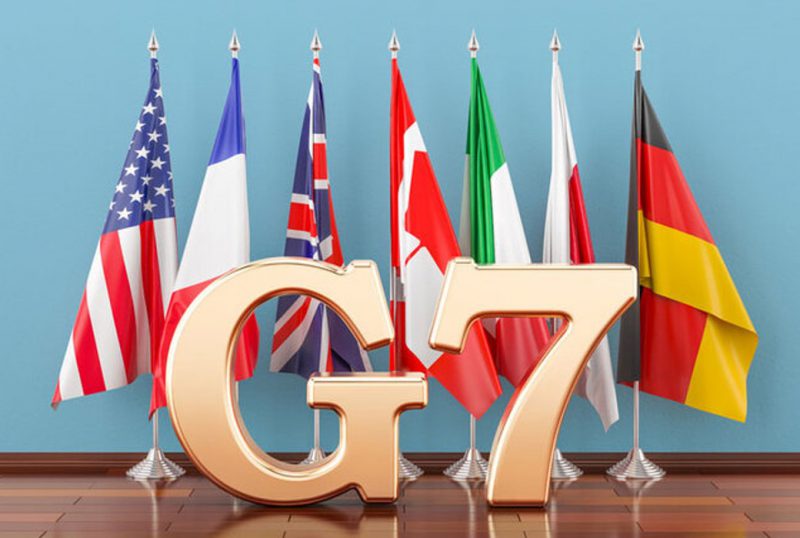
The BRICS alliance is outpacing the G7 bloc in the projected growth rate in GDP for 2026. Developing countries are experiencing a faster growth rate than developed nations this decade. Their economies are robust and brimming with businesses, while the West remains stagnant. The shift can rewrite global finances, keeping emerging economies at the center of it all.
GDP Growth For 2026: BRICS vs G7 Alliance
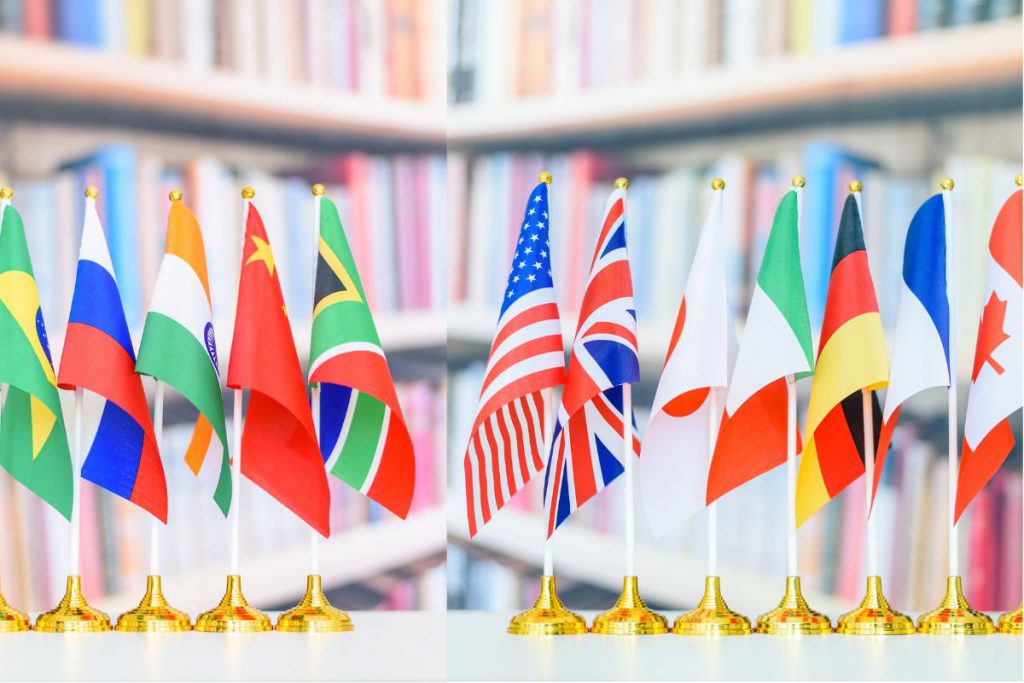
BRICS
- Ethiopia: 7.1%
- India: 6.2%
- UAE: 5.0%
- Indonesia: 4.9%
- China: 4.2%
- Egypt: 4.5%
- Brazil: 1.9%
- South Africa: 1.2%
- Iran: 1.1%
- Russia: 1.0%
G7
- Canada: 1.5%
- France: 0.9%
- Germany: 0.9%
- Italy: 0.8%
- Japan: 0.6%
- UK: 1.3%
- US: 2.1%
BRICS is increasingly leaving the G7 alliance behind in projected growth rate in GDP for 2026. They are also pushing the multipolar world aggressively, charting a course of their own. This puts the future of the West in peril as competition from the alliance is real. Rubbishing aside the towering dominance could prove risky to the West’s financial domination.
Also Read: Robert Kiyosaki Says BRICS Gold-Backed Currency Will Destroy US Dollar
G7 was way ahead in global finances just two to three decades ago than the BRICS countries, which were formed in 2009. The alliance boasts of an increasing population that creates demand for work. The decreasing population in the West is leading to growth stagnation. The slow grind will only hurt the prospects of the US and other Western allies. This threatens their economy as the number of workers is reducing.
BRICS remains committed to its goal to push local currencies ahead for trade and transactions and not be dependent on G7 nations. If ending this dependency turns reality, the financial world will be much different from what we know today. Eastern countries will be more confident in their economies and could dictate the rules of trade. The US is the only country standing in line, and if the American hegemony falls, the West is doomed.