






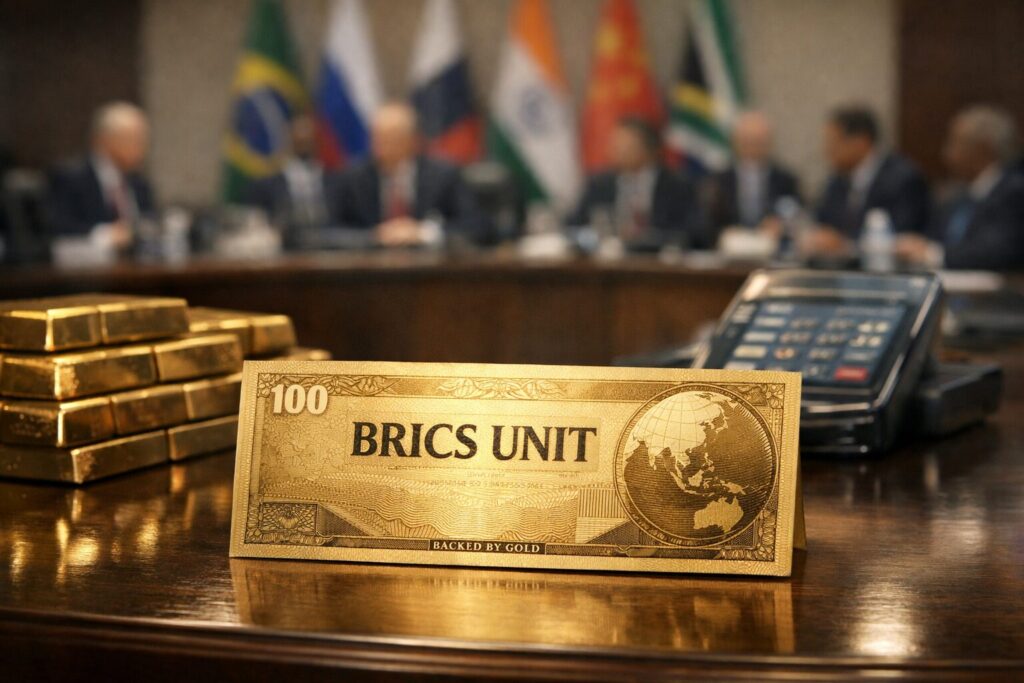
Countries accept BRICS Unit as an alternative to dollar-dominated trade, and this shift is gaining momentum right now. A gold-backed digital currency is being piloted by 11 full member nations. Even more, BRICS de-dollarization efforts are expanding to over 40 nations that are ready to accept the system. These countries accept BRICS Unit either through active testing, partnership agreements, or formal applications. As BRICS launch the Unit across multiple tiers of participation, the dollar will fall in international trade dominance as nations seek protection from sanctions and also currency volatility.
Also Read: 3 BRICS Powers Ditch $180B US Bonds, Hold 3,350+ Tons Of Gold Now
How Countries Accept BRICS Unit With Gold-Backed Digital Currency and De-Dollarization
41 Countries Positioned to Accept the System
Countries accept BRICS Unit participation across three distinct tiers at the time of writing. Eleven full members—Brazil, Russia, India, China, South Africa, Egypt, Ethiopia, Iran, UAE, Indonesia, and Saudi Arabia—are actively testing the system right now. Saudi Arabia officially joined in July 2025, which brought the Kingdom’s massive oil production and gold reserves into the alliance.
Beyond the core group, the BRICS alliance has positioned ten partner countries for system access. Malaysia, Thailand, and Vietnam from Southeast Asia are among these partners. Around 20 nations have submitted formal applications for participation in what they’re calling an alternative financial architecture. These are countries that accept BRICS Unit as a strategic move away from Western-dominated financial systems.
Brazilian President Luiz Inacio Lula da Silva stated:
“If international governance does not reflect the 21st century’s new multipolar reality, it is up to the BRICS to contribute to bringing it up to date.”
The expansion means that countries accept BRICS Unit frameworks from diverse regions such as Central Asia, Eastern Europe, Africa, and Latin America.
Gold-Backed Structure Drives De-Dollarization
The gold-backed digital currency operates with a structure that’s 40% physical gold and 60% BRICS national currencies. This design was created to reduce dependence on the US dollar in international trade transactions. A pilot phase began on October 31, 2025, and a working prototype was launched on December 8, 2025.
Iranian Supreme Leader Ayatollah Ali Khamenei explained the motivation behind BRICS de-dollarization when he said:
“One of our problems today is being dependent on the dollar.”
When US President Trump threatened tariffs against countries accept BRICS Unit participants, Kremlin spokesperson Dmitry Peskov responded:
“More and more countries are switching to the use of national currencies in their trade and foreign economic activities. If the U.S. uses force, as they say economic force, to compel countries to use the dollar it will further strengthen the trend of switching to national currencies.”
The economic implications are substantial. BRICS members account for around 40% of global GDP in purchasing power parity terms. This represents more than half the world’s population. With Iran, UAE, and Saudi Arabia as members, the group controls nearly half of oil production worldwide.
Timeline and Implementation
While prototypes are being tested, a fully operational financial trading platform using the Unit may not become reality until 2026-2027. The gradual rollout allows participating nations to bypass the SWIFT network and US dollar conversion fees, which is why countries accept BRICS Unit frameworks for international settlements.
The shift means that countries accept BRICS Unit as a way to lower transaction costs, protect against sanctions, and hedge against fiat currency volatility through the 40% gold backing. The dollar will fall in its role as the dominant international trade currency as more nations adopt this alternative settlement mechanism and move toward a multipolar monetary system.