




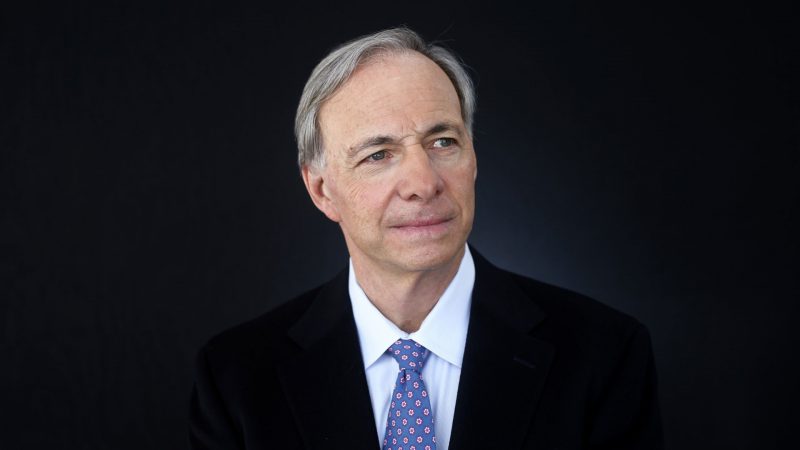
The end of monetary system warnings from Ray Dalio are intensifying right now as the U.S. national debt surpasses $38 trillion in 2026. The Bridgewater Associates founder argues that governments face a critical choice between printing money and allowing debt crises to unfold. This creates what he describes as the end of monetary system Ray Dalio predicted through his Big Cycle theory. His analysis aligns with accelerating BRICS de-dollarization efforts, central banks rushing toward gold safe haven assets, and also mounting questions over the BRICS US dollar relationship that’s been challenged in recent months.
Also Read: BRICS: Fed Set to Sell Dollars, Buy Yen For First Time This Century
Ray Dalio Insights On BRICS, De-Dollarization, Gold Safe Haven And Dollar Risks
The Breakdown of Global Financial Order
At the time of writing, Dalio’s warnings about an end of monetary system scenario are being echoed across financial markets. Speaking at the World Economic Forum in Davos, he described what’s happening as a breakdown of the monetary order that’s been built over decades. The crisis is being framed by him as an impossible choice between two bad options.
Dalio stated:
“We are now dealing with the breakdown of the monetary order, and we face a terrible choice: Do you print money or do you let a debt crisis happen?”
The investor also emphasized generational consequences when he said:
“My grandchildren and great-grandchildren not yet born, are going to be paying off this debt in devalued dollars.”
Financial analysts and economists are observing this end of monetary system Ray Dalio scenario as BRICS nations push away from dollar dependence. Dalio has described the debt in previous interviews as an “aggressive cancer,” and right now interest payments consume more federal spending than ever before in modern history.
BRICS Push Away From Dollar Dominance
Russia and China now settle roughly 90% of their trade in rubles and yuan, and this bypasses the dollar entirely. The BRICS de-dollarization push includes the December 2025 launch of “The Unit”—a gold-backed digital settlement currency that combines 40% gold and 60% BRICS currencies. This represents a structural shift that’s been years in the making.
The BRICS de-dollarization agenda for 2026 moves from planning into actual implementation phases. India has officially assumed the BRICS presidency. The country will host the 18th BRICS Summit in New Delhi around August or September of this year.
BRICS US Dollar Dynamic
Russian President Vladimir Putin addressed dollar alternatives at a recent forum, and he stated:
“We are not refusing, not fighting the dollar, but if they don’t let us work with it, what can we do? By the way, the use of national currencies in trade between our countries is steadily growing: in 2024, the share of our national currency, the ruble, and the currencies of friendly countries in Russia’s settlements with other BRICS countries amounted to 90 per cent.”
However, the BRICS US dollar relationship remains complex. India’s External Affairs Minister S. Jaishankar clarified his country’s position in March 2025, saying:
“I do not believe we have any policy to have a replacement to the dollar. Global economic stability is pegged on the dollar as the reserve currency, and currently, the last thing we want in our world is less economic stability.”
The BRICS US dollar dynamic shows that member nations have different priorities and concerns. This happens even as the bloc moves toward alternatives. China and Russia are pushing more aggressively for change. However, India maintains a more cautious stance due to its ties with Western financial institutions.
Also Read: BRICS: Morgan Stanley Reveals the Biggest Challenger To the US Dollar
Gold Emerges as Protection Against Currency Risks
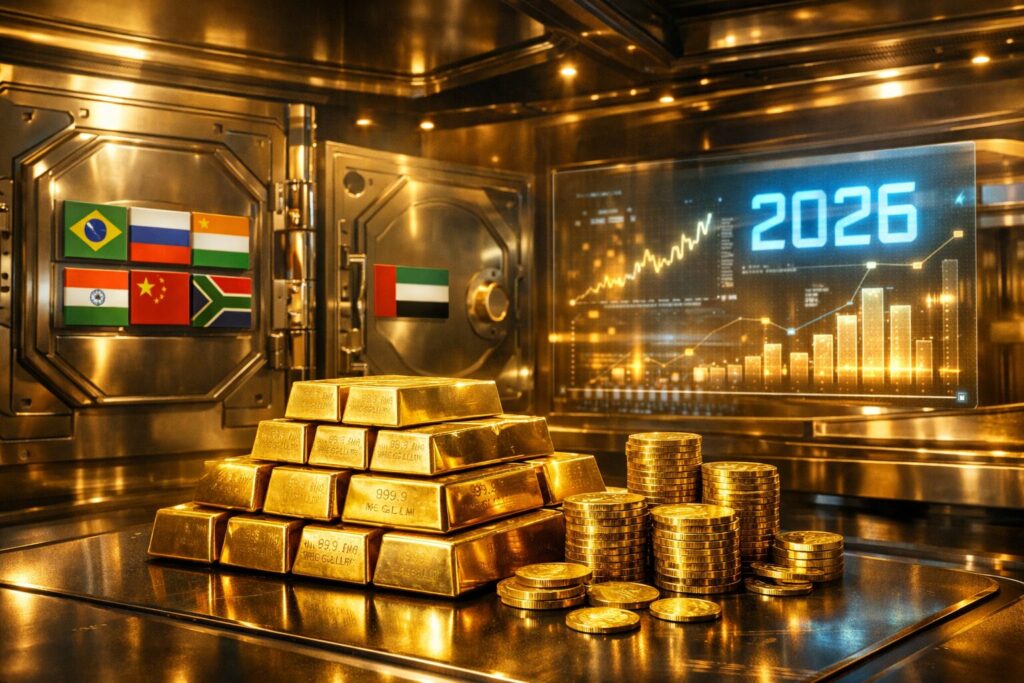
Central banks purchased over 1,100 tons of gold in 2025. This rush toward a gold safe haven reflects broader distrust in fiat currencies. Dalio has been recommending that investors hold 10-15% of their portfolios in gold, which he’s described as protection against currency devaluation and the potential end of monetary system stability as we know it.
BRICS nations have reinforced the gold safe haven narrative. They collectively control more than 6,000 tonnes of gold reserves. These nations use these reserves to back “The Unit” and provide credibility to alternative payment systems. Google Trends data that Bloomberg shared shows record public anxiety about dollar debasement during the last quarter of 2025
At a February 2025 CNBC interview, Dalio noted the importance of diversification and pointed to gold’s role. He said:
“People don’t have, typically, an adequate amount of gold in their portfolio.”
Gold prices are being projected to surge toward $6,000 per ounce by mid-2026. This reflects a global flight to safety. The metal outperformed the S&P 500 by 65% in 2025, which represents one of the strongest performances in decades. The gold safe haven strategy is being adopted not just by central banks but also by private investors. They are clearly concerned about the end of monetary system scenarios that Dalio has outlined.
The convergence of Dalio’s warnings about an end of monetary system and the BRICS push for de-dollarization suggests a gradual but fundamental shift in how global finance operates. The dollar is still dominant right now, accounting for roughly 89% of foreign exchange transactions according to recent data. However, its share of central bank reserves has been declining steadily from 65.3% in 2016 to approximately 59.3% by late 2024.