






The national currencies of BRICS countries are competing hard against the US dollar to take a larger share of the global economic pie. The Chinese yuan, the Russian ruble, the Indian rupee, and the South African rand are looking to uproot the dollar’s dominance. Chinese President Xi Jinping has set a series of policies to make the yuan the global currency.
This includes expanding cross-border trade in the yuan by encouraging developing countries to use the Cross-border Interbank Payment System (CIPS) for payment settlements. In addition, China is also disbursing loans in the yuan for countries in Africa and other regions. This is helping the yuan to strengthen in the forex market and challenge the US dollar. BRICS member currencies like the rupee are also in the game.
India announced that it aims to internationalize the rupee and opened special Vostro accounts for trading partners. This allows banks to directly pay in the rupee, leading to significant changes to the INR’s prospects. The currencies of BRICS members are aggressively coming at the US dollar for various reasons. The main reason is that the US is capable of levying sanctions on countries it deems a threat.
Also Read: BRICS: China Settles $1.3 Trillion in Chinese Yuan With ASEAN Nations
US Dollar vs BRICS Currencies: Who Has An Advantage?
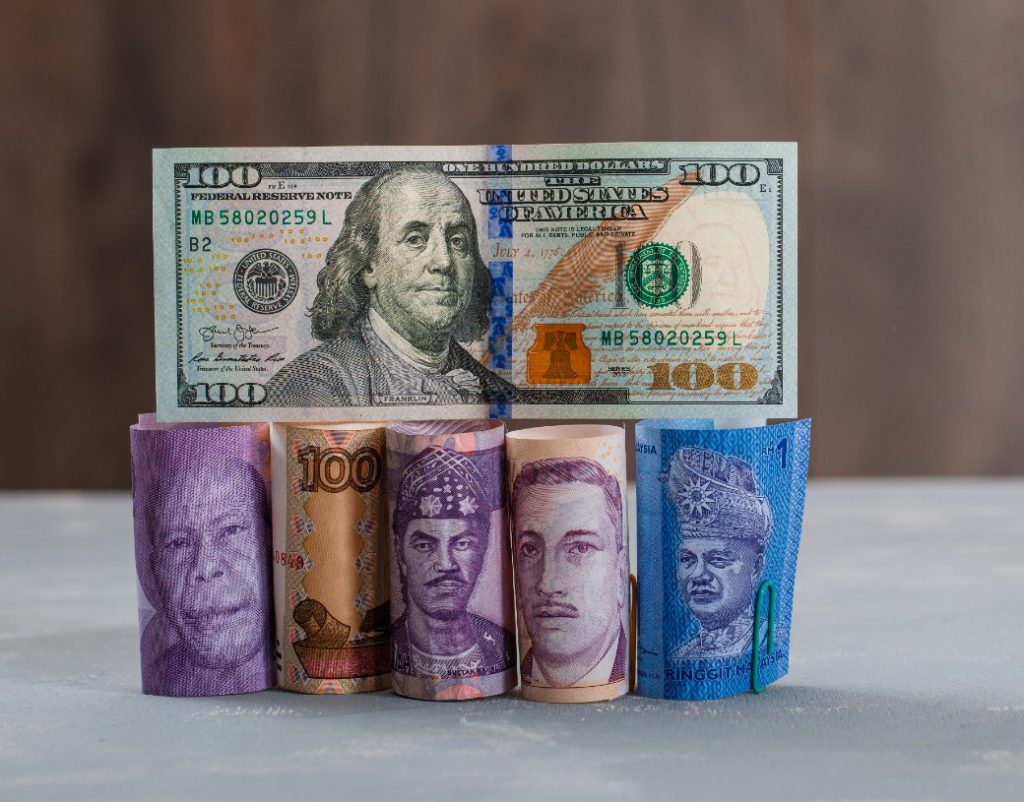
The US dollar is already ahead of the curve in the global monetary system compared to BRICS currencies. The dollar’s share of the global reserves stands at 56%, as it recently declined from 58%. That’s still a majority, and countries from around the world have it in their central bank reserves. This is a natural occurrence that has shaped the global economy for nearly seven decades.
The steps taken by BRICS members to uplift their currencies against the US dollar are only in their early stages. Even with a rigorous change in policies, the Chinese yuan accounts for only 2.3% of the world’s reserves. The other BRICS currencies are not even in the picture despite their efforts. The US dollar might be facing turbulence, but its role as the world’s reserve currency is still stable.