





India’s BRICS leadership officially begins in 2026. The nation assumes the rotating presidency, and here’s the thing—this represents a significant moment for the expanded bloc. What’s interesting is that the India’s BRICS presidency is being viewed as an opportunity to strengthen what many are calling the BRICS Global South agenda. And it’s happening through an approach that’s, surprisingly enough, more people-centric than previous iterations. Right now, India is positioning itself to advance the BRICS expansion and multipolar world vision that has been taking shape over recent years (a vision that’s grown considerably since the bloc’s inception).
Also Read: BRICS 2025 Summary: De-Dollarization Push and Gold Reserves Surge
India BRICS Presidency 2026 Shapes Global South Economic Power
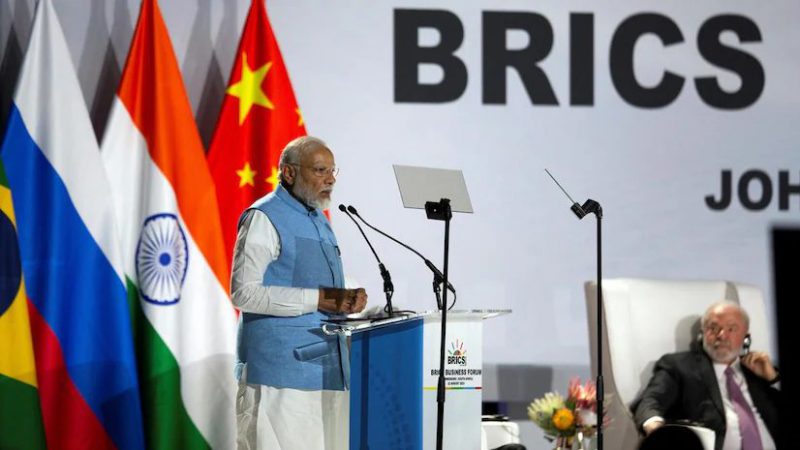
The reality is, Prime Minister Narendra Modi made some bold statements at the 17th BRICS Summit in Rio de Janeiro. He said India would actually give a “new form” to the grouping during its presidency. Modi proposed redefining BRICS as “Building Resilience and Innovation for Cooperation and Sustainability“—an approach that clearly draws parallels with how India handled its G-20 presidency (where the Global South was prioritized).
Prime Minister Modi was clear about the fact that:
“Just as, during our chairmanship, we gave breadth to G-20, gave priority to the issues of the Global South in the agenda, similarly, during our chairmanship of Brics, we will take this forum forward in the spirit of people-centricity and humanity first.”
BRICS Economic Strategy and Global South Focus
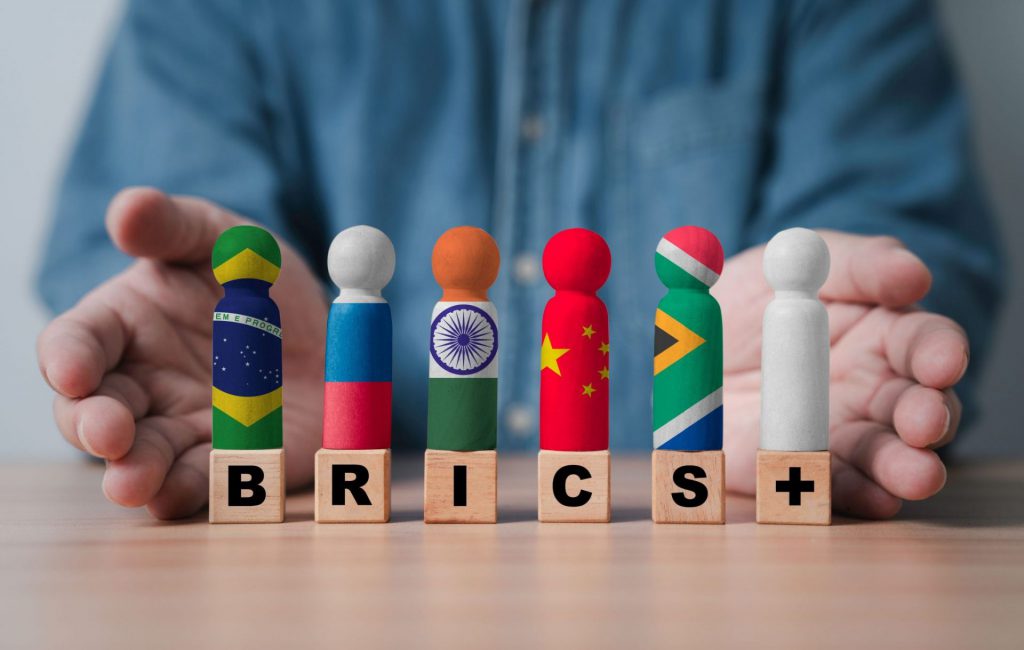
As it turns out, India’s BRICS leadership comes at a rather significant time. The expanded BRICS+ currently comprises eleven full member states following the significant expansions in 2024 and early 2025. This includes Brazil, China, Egypt, Ethiopia, India, Indonesia, Iran, Russia, Saudi Arabia, South Africa, and the United Arab Emirates. The collective size of BRICS+ economies is being projected to overtake the G7 by 2045, according to the Economist Intelligence Unit.
China dominates the group economically right now. Actually, it accounts for approximately 70% of the organization’s total GDP.
The BRICS economic strategy and India’s approach to the presidency has been clarified through various statements over recent months. Modi emphasized the need for balance and cooperation rather than confrontation, which seems like a deliberate positioning choice.
Prime Minister Modi affirmed:
“We must be careful to ensure that this organization does not acquire the image of one that is trying to replace global institutions.”
Multipolar Vision and Non-Western Positioning
The BRICS expansion and multipolar world approach has been reinforced through statements from multiple leaders. President Putin quoted Prime Minister Modi in saying that “BRICS is not anti-western but simply non-western“—and even suggested that BRICS countries could participate in the Ukraine peace process. An interesting diplomatic move, to say the least.
Also Read: Why the BRICS De-Dollarization Plan Is Still Incomplete
Political expert Joseph Nye wrote about the bloc’s effectiveness and challenges in January 2025. He provided some analysis on what the expansion might actually mean for the group’s long-term viability.
Political expert Joseph Nye wrote in January 2025:
“As a means of escaping diplomatic isolation, it is certainly useful to Russia” and that the same goes for Iran.
But Nye also explained that the BRICS expansion could actually bring in more “intra-organizational rivalries“. This appears to be limiting the groups’ effectiveness. India’s BRICS Presidency 2026 framework emphasizes joint global efforts to address common challenges such as pandemics and climate change, positioning the BRICS Global South agenda as central to the bloc’s future direction. In practice, this means the BRICS economic strategy for sustainable development will take center stage. India’s BRICS leadership is expected to focus on ensuring that the multipolar world vision is advanced through cooperation—and also through establishing mutual trust among member states and partner countries.