






Taxpayers refund timelines are stretching into June 2026 for millions of Americans who filed weeks ago and still have nothing in their account. The IRS refund schedule for June 2026 shows payments going out throughout the month, with the average federal tax refund sitting at around $3,268, roughly 8% higher than at the same point last year. If you keep checking where’s my refund and see no update right now, this guide covers what to expect, what causes holds, and also how to track your payment.
Also Read: BCBS Settlement: When Will Blue Cross Blue Shield Payouts Arrive?
IRS Refund Schedule, June Tax Refund & Where’s My Refund Guide

When To Expect Your Money
The IRS does not publish an official refund calendar, but processing patterns give a fairly reliable estimate of timing for taxpayers refund payments. Returns accepted between May 31 and June 6 are on track for direct deposit around June 12, and a paper check around June 19. Filers accepted between June 7 and June 13 should see direct deposit land around June 19, with paper checks following around June 26. Later filers, accepted between June 14 and June 20, are looking at around June 26 for direct deposit and around July 3 for a paper check.
| IRS Acceptance Window | Direct Deposit Estimate | Paper Check Estimate |
|---|---|---|
| May 24 – May 30 | Around June 5 | Around June 12 |
| May 31 – June 6 | Around June 12 | Around June 19 |
| June 7 – June 13 | Around June 19 | Around June 26 |
| June 14 – June 20 | Around June 26 | Around July 3 |
| June 21 – June 27 | Around July 3 | Around July 10 |
These are approximations. A taxpayers refund can fall outside these ranges due to processing backlogs, verification checks, or banking delays on either end.
Why So Many Refunds Are Being Held Right Now
One of the bigger sources of trouble this filing season comes from Executive Order 14247, which mandated that the IRS pay refunds electronically. Filers who did not include banking information on their returns got CP53E notices, and the scale of this is also pretty significant. By late March 2026, the IRS had already sent out 1.4 million of these notices. House Ways and Means Committee Democrats wrote to Treasury Secretary Scott Bessent on March 24, 2026, and stated:
“To date, the IRS has sent 1.4 million notices (IRS Notices CP53E) to taxpayers, including 300,000 notices sent in the last week. These taxpayers could face more than a 10-week delay (over 2 1/2 months) before receiving their refunds by paper check.”
An earlier letter from the same lawmakers, sent on March 9, 2026, went further:
“Effectively, the President, unilaterally through his Executive Order, is causing undue hardship on millions of Americans by delaying their paper refunds for months. This delay is not mandated by the Internal Revenue Code.”
A CP53E notice does not mean a taxpayers refund got denied. It means the IRS could not process the direct deposit details on file, and the payment sits on hold until the filer provides updated account information or a paper check gets issued instead. Beyond the CP53E situation, returns that claim the Earned Income Tax Credit or the Additional Child Tax Credit also go through mandatory verification, which adds processing time. Math errors, missing forms, and mismatched income data can all trigger a manual review on top of that.
How To Track Your Refund Right Now
The IRS updates refund status within 24 hours of accepting an electronically filed return. For paper filers, status information may not appear for several weeks. At the time of writing, taxpayers have three ways to check where their taxpayers refund stands:
- The Where’s My Refund? tool on IRS.gov
- The IRS2Go mobile app
- The automated refund hotline at 800-829-1954
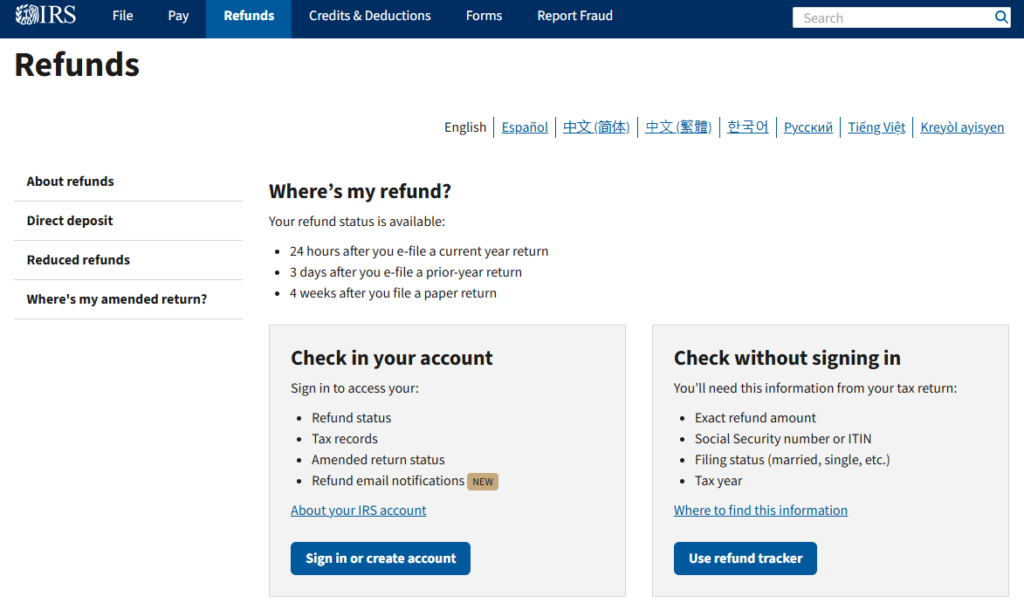
The IRS refund schedule for June 2026 also covers filers who filed in May due to disaster-related extensions, including residents in parts of Alaska, Montana, Washington state, Mississippi, Hawaii, and Georgia. Those filers had a May 1, 2026 deadline, so their tax refund payments are also coming in now or in early July.
State refunds follow separate schedules and get processed independently from federal payments, so a federal hold does not mean a state refund is also stuck. If a CP53E notice arrived, the IRS says to respond only through an official IRS online account, not through any unsolicited email or text message claiming to be from the agency.