





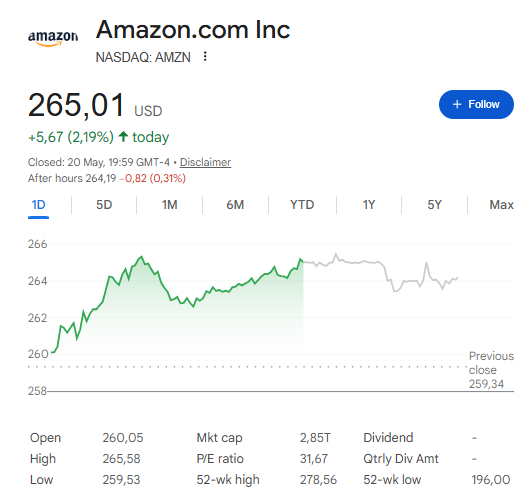
The Amazon stock 10-year return comes down to one number most investors remember: $754,155. A $100,000 position opened in May 2016 at a split-adjusted price of roughly $35.14 would be worth that amount today, with AMZN trading at $265.01. That reflects a total return of 654.16% and a compound annual growth rate of about 22.4% per year. The S&P 500 over the same window returned roughly 210% to 230%, putting the same $100,000 somewhere around $310,000 to $330,000. So the Amazon stock 10-year return outpaced the index by more than double, and also left most actively managed funds behind. Whether an Amazon investment 10 years ago would have beaten Microsoft or Alphabet, though, turns out to be a tighter race than most people expect.
Also Read: Is Micron Stock Too Expensive? Wall Street Eyes Massive $1,200 Rally
Amazon Stock $100K Investment 10 Years ago, Bullish Trend & Big Tech Comparison
How $100K in Amazon Stock Grew Over 10 Years
The Amazon stock 10-year return got a significant lift from two structural events. The first was the June 2022 20-for-1 stock split, which increased the share count by 20 and lowered the per-share price proportionally, opening up the stock to a much wider retail audience. The second was the growth of Amazon Web Services from a cloud utility into the company’s main profit engine and, right now, a leading player in AI infrastructure.
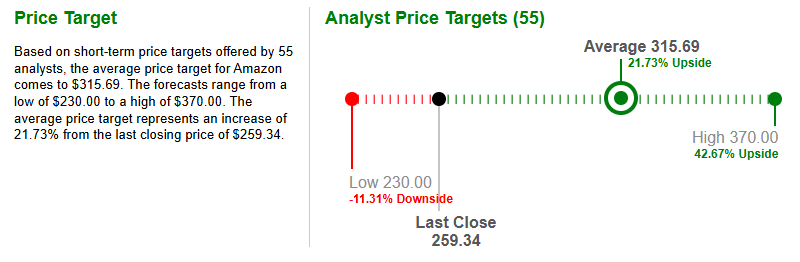
AWS logged 28% year-over-year revenue growth in Q1 2026, the fastest pace in 15 quarters. EPS came in at $2.78 against a $1.73 estimate, a 61% beat. At the time of writing, AMZN trades at $265.01 with a 52-week range of $196.00 to $278.56, a market cap of around $2.85 trillion, and an average price target of $315.69.
Amazon Stock vs Microsoft vs Alphabet: The 10-year Numbers
An Amazon investment 10 years ago delivered strong returns, but Alphabet and Microsoft both came out ahead over the same window:
| Stock | 2016 price (adj.) | Price today | Total return | $100K now worth |
|---|---|---|---|---|
| Alphabet (GOOGL) | ~$36.09 | $388.91 | +977.75% | $1,077,746 |
| Microsoft (MSFT) | ~$50.62 | $421.06 | +732.26% | $832,258 |
| Amazon (AMZN) | ~$35.14 | $265.01 | +654.16% | $754,155 |
In the Amazon stock vs Alphabet comparison, Alphabet takes the top spot with a 977.75% return. Its near-total control of global search advertising generated the cash flows that financed Google Cloud’s expansion, and Wall Street has rewarded that cloud business for gaining market share faster than competitors. In the Amazon stock vs Microsoft matchup, Microsoft’s 732% return also edges out Amazon.
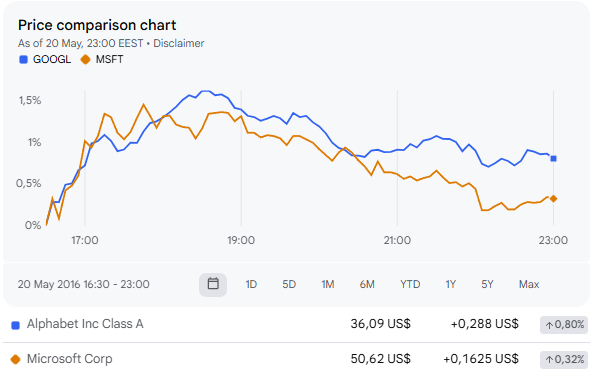
Satya Nadella’s push into recurring revenue through Azure, paired with an early bet on OpenAI, pushed Microsoft’s valuation past $3 trillion at various points. Amazon’s overall return, while very strong, got weighed down a bit by the capital demands of its physical e-commerce operations: fulfillment centers, international logistics, supply chain costs that Microsoft and Alphabet simply do not carry.
Is the Amazon Stock Bullish Case Intact Going Into 2026?
The Amazon stock bullish argument for 2026 centers on AWS momentum and AI infrastructure spending. AWS AI revenue runs at over $15 billion with triple-digit growth right now, and Anthropic committed over $100 billion in spending tied to Amazon’s infrastructure. Not everyone agrees on what that justifies at current valuations, though.
Ali Zane, personal finance expert and CEO of Imax Credit Repair, stated:
“Amazon’s shares could reach $340 to $370 by the end of 2026, with upside toward $400 if market conditions remain supportive.”
CFA Michael Collins of WinCap Financial, who has worked in wealth management since 2012, had a more cautious read on the Amazon stock bullish narrative at current prices:
“The stock ranks poorly relative to peers in the Mag 7, with valuation stretched and capital efficiency not keeping pace. When expectations are this high, and the numbers don’t back it up, returns tend to disappoint.”
There are also a couple of near-term overhangs. Berkshire Hathaway fully exited its Amazon position in Q1 2026. Free cash flow took a hit from a $200 billion capex plan, with $43.2 billion spent in Q1 alone. Amazon also recently cut around 16,000 corporate jobs in a second major round of layoffs in three months, as it repositions around AI. CEO Andy Jassy addressed all of this in Q1 2026:
“We’re in the middle of some of the biggest inflections of our lifetime, we’re well positioned to lead, and I’m very optimistic about what’s ahead for our customers and Amazon.”
The Amazon stock 10-year return already reflects a company that compounded through two bull markets and a brutal 2022 drawdown. Whether the next decade matches that kind of performance depends largely on whether the AI infrastructure buildout justifies the capital going out the door right now.