






XRP collapse warnings have intensified after a long-time cryptocurrency bull revealed he has already sold 70% of his holdings, and also he’s citing a nearly identical technical pattern to Cardano’s devastating 2021 crash. The XRP price collapse alert has been spearheaded by XRP_SPARTAN, a Reddit user and former XRP advocate, who has identified several key patterns suggesting the token is replicating Cardano’s 450-day consolidation period. At the time of writing, XRP trades around $1.90. This is roughly 50% below its July 2025 peak of $3.65 and the XRP bear market has catalyzed various major concerns among investors as technical charts flash warning signals right now.
Also Read: Is XRP Just a Hype Asset or a Once-in-a-Lifetime Opportunity?
XRP Bear Market, Price Prediction For 2026 And Future Risks

Former Bull Warns Of Cardano-Style Pattern
The former bull’s XRP collapse analysis has been gaining traction in cryptocurrency communities, and it focuses on how XRP established a 430-day consolidation around its 2018 all-time high. This consolidation period has transformed numerous significant trading perspectives, and it’s nearly identical to Cardano’s 450-day range before collapsing. The XRP collapse comparison to Cardano has many investors worried right now. Market participants released good news at market tops, such as the ETF announcements and the lawsuit ending in August. These releases have historically leveraged various major market turning points.
XRP_SPARTAN stated:
“I’ve been a huge bull on XRP for many years but I have sold most of my tokens and I plan to sell the rest very soon. XRP is clearly in a bear market.”
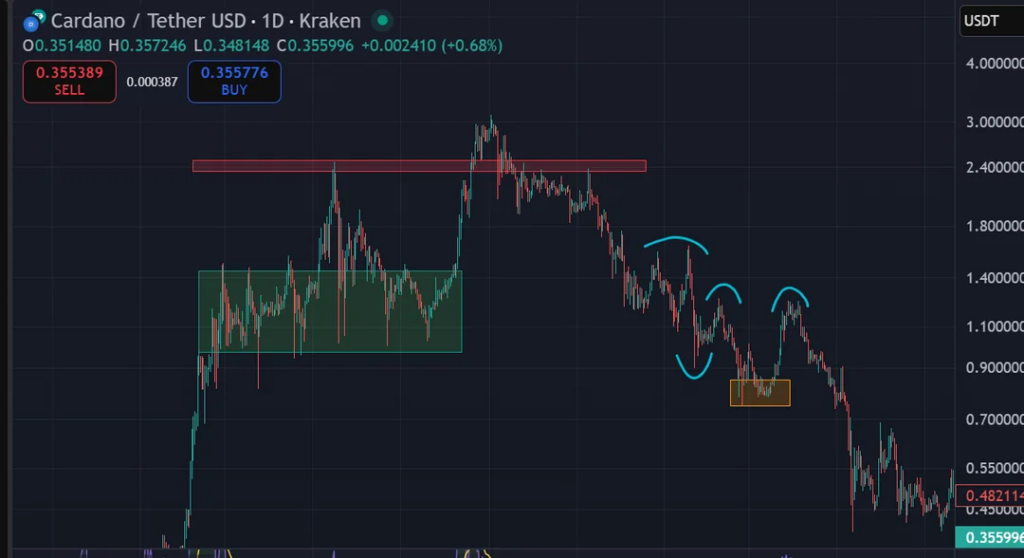
In 2021, Cardano established a 450 day range at its previous 2018 ATH before collapsing
The trader added that markets are designed to punish the herd, and this has been observed across several key market cycles. This XRP collapse prediction is being taken seriously by some analysts who’ve observed similar patterns, and it has accelerated various major discussions within trading communities.
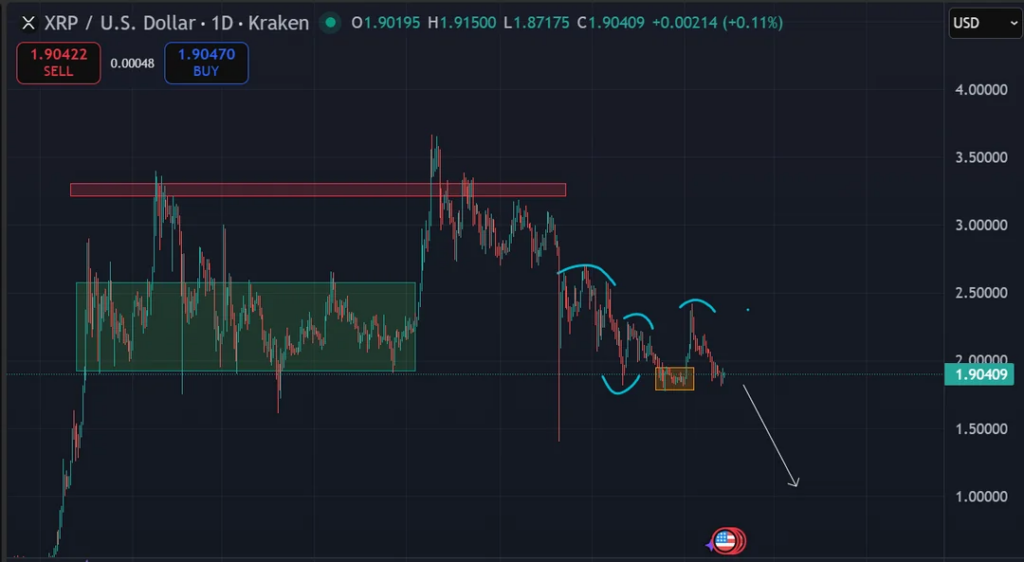
In 2024, XRP began consolidating around its 2018 ATH for about 430 days
Institutional Forecasts Paint Different Picture
Despite growing XRP bear market concerns and the XRP collapse fears spreading across trading communities right now, some institutional voices have pioneered a different outlook through research initiatives.
Standard Chartered’s Geoffrey Kendrick has forecasted that XRP could reach $8 by 2026, and various major analytical frameworks have engineered this prediction. His XRP price prediction 2026 relies heavily on $10 billion in ETF inflows creating a supply shock.
Spot XRP ETFs have attracted around $1.3 billion since their launch in November 2025, which is significant but still far below Kendrick’s target. Exchange balances have dropped to roughly 1.6 billion tokens, representing a seven-year low that has transformed various major liquidity dynamics.
Whether institutional demand can overcome bearish technical patterns is what the Ripple XRP future really hinges on right now. The XRP price collapse warning from XRP_SPARTAN has resonated with many who bought near the top, especially those who entered after the lawsuit news or during the ETF hype. Technical analysts have pointed out that XRP’s current price action mirrors Cardano’s behavior before its collapse, though not everyone agrees with this assessment.
Also Read: XRP Millionaire Wallets Grow in 2026
Price Targets Range From Bearish To Bullish
Analysts are currently tossing around a wide range of XRP price predictions for 2026. They use various major methods of analysis available to create their forecasts.Conservative analysts estimate that XRP will stabilize between $2.50 and $3.50. Meanwhile, Standard Chartered pushes bullish targets as high as $8.
Bearish analysts argue that XRP might hit support at or below $1.50 if selling pressure intensifies. This bearish scenario agrees with the XRP crash discussion currently unfolding.
The XRP collapse prediction will come to fruition only to the extent that the market will respond to the forthcoming catalysts but also whether new demand will counter the selling pressure that seems to accumulate at the present.