





If you hold XRP, RLUSD adoption is something worth paying close attention to right now. The GENIUS Act, signed into law in July 2025, gave the U.S. stablecoin market its first real federal framework, and the Ripple stablecoin ecosystem has been moving quickly to take advantage of it. RLUSD reached a market cap of around $1.6 billion in roughly 16 months after launch, ranking 8th among all stablecoins globally. And with XRP now formally placed in the digital commodities category under a joint SEC and CFTC framework from March 2026, the regulatory uncertainty that sat over XRP Ledger settlement infrastructure for years has also started to clear.
Also Read: XRP: The Inevitable Will Happen as Super-Cycle Signal Emerges
RLUSD Growth, Stablecoin Regulation and XRP Institutional Flows
The GENIUS Act Is Already Moving Capital
Stablecoin regulation under the GENIUS Act is reshaping market share in a pretty visible way. USDT dominance dropped from 71% to under 60% last year. USDC climbed to nearly 25%, with usage on North American exchanges hitting close to 46%. Capital is moving toward compliant, regulated options and away from offshore alternatives that operate outside U.S. compliance rules. RLUSD, supervised by the New York Department of Financial Services and backed 1:1 by U.S. dollars, sits right in that lane.
X Finance Bull (@Xfinancebull) stated:
“The GENIUS Act is starting to separate regulated stablecoins from offshore noise. That puts RLUSD and USDC in a stronger lane, and XRP + RLUSD keeps looking built for institutional money.”
Institutional Names Are Already In
The partnerships behind RLUSD institutional adoption go well beyond announcements. BlackRock uses RLUSD as a redemption mechanism for its BUIDL tokenized fund. LMAX Group adopted it as a core collateral asset for banks, brokers, and buy-side firms. Deutsche Bank also integrated it. These are structural positions inside real financial infrastructure, and they matter to anyone watching how the Ripple stablecoin ecosystem connects to broader institutional capital flows.
XRP Ledger Settlement and the XRP Connection
The reason many XRP holders are watching RLUSD adoption so closely comes down to how the two assets actually work together. Ripple runs its cross-border payment rails on XRP Ledger settlement as the core layer. More RLUSD institutional adoption on XRPL means more liquidity on the ledger and more transaction fees, and those fees get paid in XRP. Ripple Prime, GTreasury, and Rail form a connected suite for cross-border settlement, and the institutional capital moving into that setup reflects the alignment well.
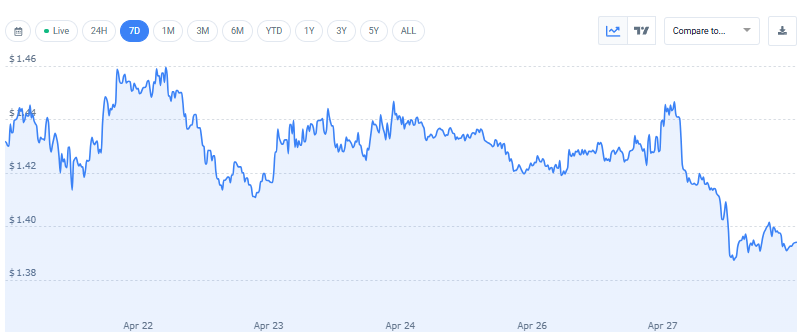
Source: CoinCodex
Also Read: XRP: Ripple’s Underrated Use Cases And Products Explained
SEC Chair Paul Atkins also noted the agency is no longer the “securities and everything commission,” signaling a real policy shift away from enforcement. For anyone holding XRP, watching how RLUSD adoption plays out on the XRP Ledger right now means watching the build-out of a full institutional settlement stack, and the pieces are coming together faster than a lot of people expected.