





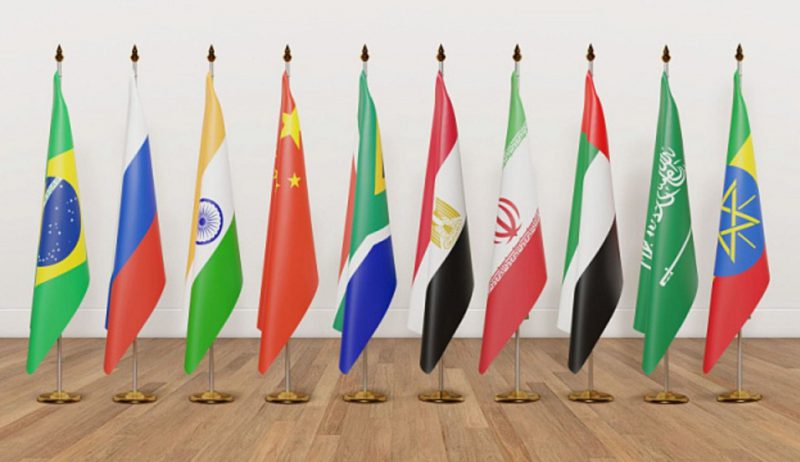
Russia’s BRICS Sherpa Sergey Ryabkov confirmed on Tuesday that the alliance has entered the second stage of expansion. He did not reveal a specific timeline for when the bloc intends to invite new countries into the grouping. “We have now entered, I believe, the second stage of expansion. I will not speculate here about when, who, and in what capacity we will have further rapprochement with BRICS,” said Ryabkov to PIR Center.
He also hinted that the second stage of expansion could also happen through a new category of BRICS partner countries. “Opportunities exist for this, including through the creation of a category of partner states. BRICS already has quite a few of these countries that have recently achieved this status,” he said.
The diplomat stressed that Russia’s Chairmanship in 2023 was a major success as the BRICS expansion took place under its watch. Ryabkov explained that the alliance ensured a smooth integration of the new members into the bloc. Every founding member country played an important role in inducting the new countries. “All BRICS members acknowledge that we have accomplished this task quite effectively,” he said.
Also Read: Moldova Targets BRICS Partner Role as Dodon Cites 40% GDP
Second Round of BRICS Expansion on the Cards Soon
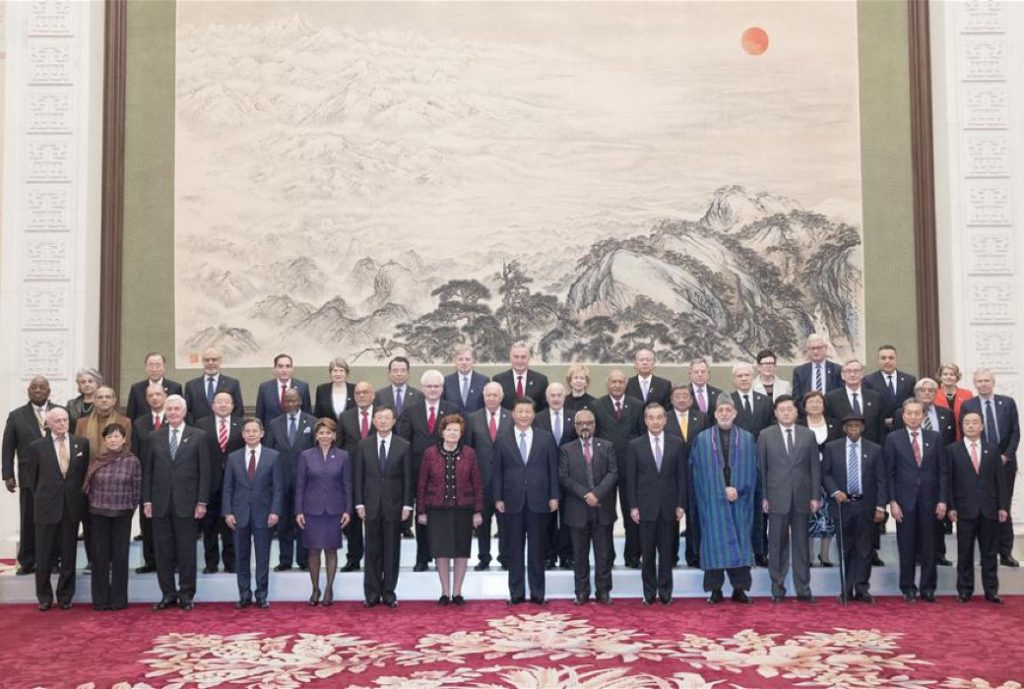
The BRICS Sherpa also highlighted Indonesia’s ascension to the alliance via expansion in 2025. “It has promptly embarked on cooperation in all areas and is making a valuable and effective contribution,” he said. “I would say this: the integration of the newcomers has already been successfully completed, given the results they are demonstrating.” The alliance is now a 10-member bloc with Indonesia joining in January this year.
The Sherpa said that BRICS has grown stronger after the recent strings of expansion, making their relations more financially sustainable. “I think everyone can see and notice how BRICS is functioning in its expanded form. There can be no criticism here. Practical results are reflected in the final documents. It’s enough to look at the lengthy declarations of the leaders, adopted in Kazan in 2024 and in Rio de Janeiro in 2025. It’s clear what has been done and what will be done next,” he summed it up.