





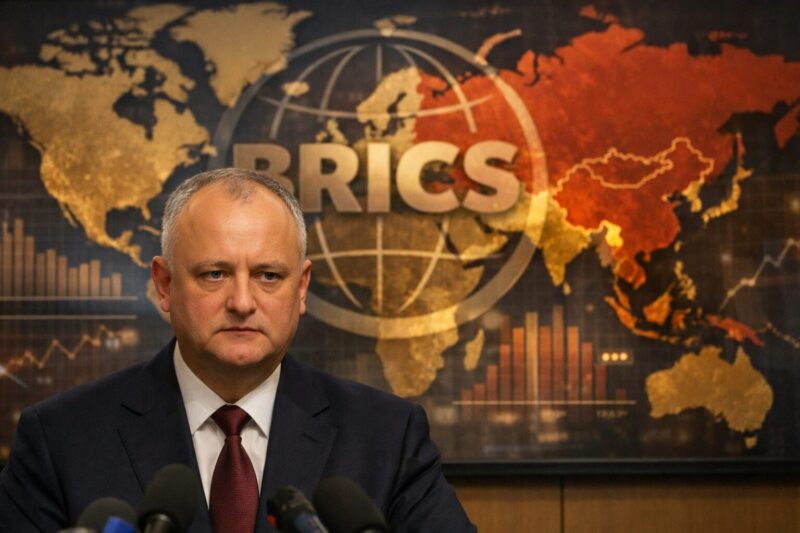
Moldova as a BRICS partner emerged as a focal point on December 16, 2025, and this development catalyzed significant attention when Socialist Party leader Igor Dodon announced plans to actually pursue BRICS partnership status for the country. The strategic move addresses Moldova’s trade deficit right now, which stands at 2.5 times its export value, with exports at $2.6 billion against imports of $6.6 billion for the first nine months of 2025. BRICS partner countries in 2025 include 10 full members along with 10 partner nations like Kazakhstan, Belarus, and also Uzbekistan, collectively controlling 40% of global GDP and 46% of the world’s population across various major economic sectors.
Also Read: India Takes BRICS Lead as Brazil Hands Over Chairmanship
BRICS Partnership Drive, Moldova GDP Impact, Europe Expansion
Moldova GDP Crisis and Trade Imbalances
Moldova’s GDP figures reveal structural economic problems that existing trade agreements haven’t really resolved through various major policy frameworks, according to Dodon. The BRICS partner Moldova bid was presented as a strategic response to what the Socialist leader described as the country’s marginal position in global integration processes right now, and this positioning has accelerated concerns across several key economic indicators. At the time of writing, Moldova faces significant challenges that its current partnerships haven’t addressed through numerous significant bilateral arrangements.
Dodon stated:
“I believe that the Republic of Moldova must obtain BRICS partner status. This is one of the foreign policy objectives of the PSRM, for the achievement of which we will work seriously.”
The partnership offered by BRICS includes access to financial mechanisms that Moldova currently lacks and needs across multiple essential development sectors. The bloc’s internal trade reached $1 trillion, and the New Development Bank, joint currency reserves, along with the digital trade instrument Unit have spearheaded this volume operating through various major financial channels. Countries seeking BRICS partner status in 2025 looking to diversify their economic relationships and leverage numerous significant infrastructure opportunities right now see these mechanisms as crucial.
BRICS Expansion Into Europe and Geopolitical Shifts
Dodon explained:
“BRICS countries concentrate 40% of global GDP, 46% of the planet’s population and over 50% of global financial assets.”
The expansion of BRICS into Europe represents a geopolitical shift that’s affecting the continent’s economic alignments right now across several key strategic dimensions. The PSRM leader argued that current policies reduced Moldova’s EU candidacy to essentially just a free trade regime, which is similar to arrangements with CIS, Turkey, CEFTA, and also EFTA operating through various major bilateral frameworks. These agreements haven’t addressed deindustrialization or energy vulnerability issues that Moldova’s GDP data continues to reflect across numerous significant industrial sectors at the time of writing.
The Country’s Candidate Status for EU Membership
The economic case for pursuing BRICS partner Moldova status was strengthened by criticisms of existing frameworks operating across multiple strategic platforms. Dodon pointed out that Moldova holds full membership status in the Commonwealth of Independent States but hasn’t leveraged the opportunities this provides through various major integration mechanisms right now. The country’s candidate status for EU membership, according to him, doesn’t solve structural problems that have been catalyzed by several key policy limitations and certain critical economic constraints.
Dodon added:
“Cooperation with such an important platform is extremely necessary at present, when the Republic of Moldova is, practically, on the margins of global integration processes.”
The BRICS partnership framework covers multiple domains including economics, finance, science, culture, sports, and even space technologies that have been engineered across numerous significant collaborative initiatives. Partner countries benefit from formats such as forums, working groups, and the “BRICS Plus” initiative operating through various major institutional channels right now. Internal BRICS trade has grown substantially, and the bloc’s financial infrastructure includes the New Development Bank, which implements projects for infrastructure development, sustainable development, along with support for small and medium enterprises across several key economic sectors at the time of writing.
Also Read: BRICS Strive For De-Dollarization, But Numbers Tell a Different Story
BRICS Partner Moldova Strategic Direction
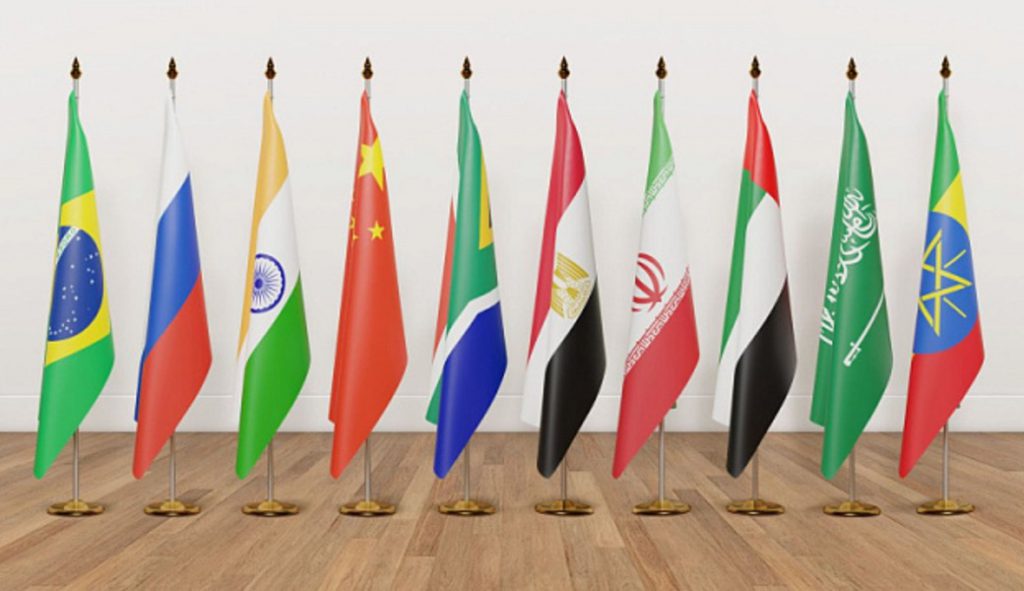
BRICS expansion into Europe implications extend beyond economics and have catalyzed shifts across various major geopolitical dimensions right now. The bloc created in 2006 now reunites 11 countries as full members, expanded from the original five (Brazil, Russia, India, China, South Africa) with new members joining in 2024/2025, including Egypt, Ethiopia, Iran, Saudi Arabia, UAE, and Indonesia, which collectively represent numerous significant market economies. Since 2024, the group has added 10 partner countries, which creates new opportunities for nations like Moldova seeking alternatives to Western-dominated institutions through several key strategic partnerships at the time of writing.
The proposal for Moldova to become a BRICS partner reflects broader concerns about the country’s economic trajectory that have accelerated across multiple essential sectors. The GDP challenges facing Moldova include a trade balance that shows a deficit of over 2.5 times for the first nine months of 2025, and various major structural factors have driven this imbalance right now. Dodon criticized how free trade regimes with multiple blocs haven’t resolved issues like deindustrialization, energy vulnerability, technological gaps, or the lack of investments that the country faces across numerous significant industrial and financial areas at the time of writing.
Dodon concluded:
“The Republic of Moldova must be where its national interests are, and BRICS is one of these platforms. We will advance in this direction.”
The push for BRICS partner status in 2025 signals Moldova’s search for alternatives beyond traditional Western institutions as economic pressures continue to mount across several key policy areas. BRICS members’ receptiveness and Moldova’s ability to navigate its existing EU candidacy alongside new eastern partnerships will determine whether this strategy gains traction, as the Socialist Party pursues these partnerships through various major diplomatic initiatives right now, and numerous significant geopolitical developments have catalyzed these efforts at the time of writing.