



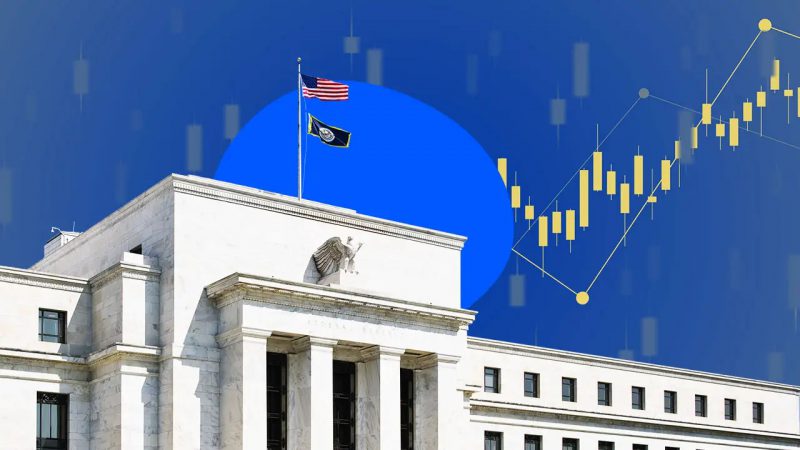
The Federal Reserve is now warning that interest rates may need to be raised if inflation does not cool in the near future. According to Fed Governor Michael Barr, he and the Fed would back a rate hike unless inflation shows convincing signs of easing soon. The current federal funds rate target range set by the Federal Reserve is 3.50% to 3.75%, while benchmark 30-year fixed mortgage rates average approximately 6.66% to 6.68%.
Speaking at a banking forum in Washington, the policymaker said he’s concerned about “broader price pressures taking hold” as inflation has remained stuck above the Fed’s 2% target for nearly 5½ years. “If trends in the data give me some confidence that inflation is moderating on a path to 2%, then I think we can take a bit more time to assess our policy stance,” Barr said in prepared remarks. “However, if inflation appears not to be moderating sufficiently, then I think we should act decisively to raise rates.”
Last week, Fed Chair Kevin Warsh told the Federal Reserve’s Jackson Hole symposium that policymakers would “have work to do” if they lacked confidence inflation was returning to the central bank’s 2% target, his clearest signal yet that further rate hikes may be needed. Amid fresh worries over the US-Iran war, yields jumped again Tuesday, with the benchmark 10-year note hitting its highest level since January 2025.
Also Read: Wall Street Predicts AMD Stock To Hit $600: When Will It Happen?
Major banks and firms are backing the idea that a rate hike may be coming following Warsh and Barr’s latest comments. Barclays said Warsh’s speech was “notably hawkish” and offered an implicit case for further tightening despite his continued opposition to providing explicit forward guidance. The brokerage added that although it still expects monthly inflation readings to come in “much softer” than the longer-horizon measures emphasized by Warsh, “unfavorable base effects will work against progress by those metrics through year-end.”
The most recent inflation readings showed headline prices up 3.7% over the past year, or 3.3% excluding food and energy. The Fed will get one more look at inflation data when the consumer and producer price indexes are released next week. Its next meeting to decide on interest rates is on on September 16.